Category: Cybersecurity.
Every article we've published under "Cybersecurity".
From the team.
 Compliance
What is the NIST framework?
The NIST Cybersecurity Framework, developed by the U.S. National Institute of Standards and Technology, provides a flexible, risk-based approach to managing cybersecurity threats. It outlines five core functions—Identify, Protect, Detect, Respond, and Recover—designed to enhance critical infrastructure protection. The framework supports organisations of all sizes in evaluating current cybersecurity posture, setting goals, and aligning security strategies with business objectives. RiskXchange helps businesses adopt and tailor the NIST framework for optimal protection across their enterprise and vendor ecosystems.
Read more Cybersecurity
How can you avoid downloading malicious code?
Malicious code is at the heart of most cyber threats, making prevention a critical priority. Discover seven proven strategies to avoid accidentally downloading malicious code, from using robust antivirus software and advanced spam filters to DNS filtering, phishing awareness, and safe download practices. Stay one step ahead of cybercriminals and protect your organisation’s devices and data.
Read more Cybersecurity
How to protect yourself from a cyber threat
This guide outlines the various sources and types of cyber threats—including nation-states, terrorists, hackers, and insider threats—and explains how businesses can identify vulnerabilities and protect against attacks. It emphasizes the importance of managing your attack surface and leveraging cybersecurity solutions like RiskXchange to prevent breaches and ensure resilience.
Read more Cybersecurity
What is IoT cybersecurity?
This guide explores the importance of IoT cybersecurity in an increasingly connected world. It explains what IoT is, why securing IoT devices is essential, and the common vulnerabilities and threats organizations face—from botnets and ransomware to shadow IoT and weak passwords. Real-world attack examples and key statistics underscore the urgency of adopting robust cybersecurity measures. The article also highlights best practices and RiskXchange's IoT cybersecurity services for protecting enterprise networks.
Read more Cybersecurity
Top 3 Ransomware Examples and what can we learn from them
Explore the top three ransomware attacks — Kaseya, Colonial Pipeline, and CNA Financial — and uncover vital cybersecurity lessons. Learn how ransomware spreads, the role of ransomware-as-a-service, and how businesses can improve supply chain security, enforce multi-factor authentication, and adopt zero-trust principles. RiskXchange offers real-time visibility and passive data monitoring to help organisations stay ahead of cyber threats.
Read more Cybersecurity
What Executives Get Wrong About Cyber Security Risk & Risk Management
Many executives mistakenly view cybersecurity solely as a technology problem rather than a critical business risk. This misconception leads to poor prioritization and increased vulnerabilities. Effective cybersecurity requires business-aligned strategies, strong leadership engagement, and a security-first culture. RiskXchange helps businesses gain full visibility over their attack surfaces, providing real-time risk ratings and actionable insights to improve cybersecurity posture and protect assets across digital ecosystems.
Read more Cybersecurity
 Statistics You Should Know In 2023
This detailed overview highlights alarming cybersecurity statistics across industries, including education, healthcare, and finance. It covers data breaches, malware and ransomware attacks, impersonation, and cryptojacking trends. The report reveals rising threats, staggering costs, and the growing complexity of cyberattacks, urging organisations to reassess and reinforce their cybersecurity strategies with trusted partners like RiskXchange.
Read more Risk Management
What Does 'Remediated' Mean? A Professional Guide to Security Remediation
Learn what “remediated” truly means in cybersecurity and why it goes beyond a simple fix. This guide breaks down the remediation lifecycle, the difference between mitigation and resolution, and how to strengthen your security posture with measurable, risk-based outcomes.
Read more Cybersecurity
What is an IT security gap?
This guide explains what an IT security gap is and why identifying and addressing these gaps is critical for protecting a company's digital assets. It outlines the process of conducting an information security gap analysis and highlights eight of the most common security gaps businesses face, such as poor patch management, IoT vulnerabilities, employee risk, and lack of threat intelligence. The article concludes with how RiskXchange can support organisations in identifying and closing their security gaps.
Read more Cybersecurity
Cyber security certifications – which one to choose?
Choosing the right cybersecurity certification depends on your career goals and experience level. Entry-level certifications like CompTIA Security+ or GIAC GSEC are ideal for beginners, while professionals may pursue advanced certifications such as CISSP, CEH, or CISM. Certification programs are offered by top organisations including (ISC)², EC-Council, CompTIA, GIAC, and ISACA—each providing specialised paths in areas like penetration testing, cloud security, incident response, and security management. Understanding the differences between academic and professional certifications is key to selecting the best fit for your career.
Read more Risk Management
Calculating ROI on TPRM Solutions: A Strategic Guide for 2026
Learn how to modernise your vendor risk assessment process in 2026 by moving beyond static questionnaires to continuous, AI-driven risk intelligence. Discover best practices for evaluating third-party security, validating vendor claims, and building a scalable assessment framework that strengthens supply chain resilience and supports regulatory compliance.
Read more Cybersecurity
How to find the right cybersecurity tools for your organisation
Choosing the right cybersecurity tools is critical for protecting organisations against growing cyber threats. Tools should be scalable, integrate easily, be purpose-built, well-supported, and widely compatible. Essential cybersecurity measures include access control, anti-malware, anomaly detection, DLP, firewalls, and SIEM systems. RiskXchange’s integrated risk management platform helps organisations build a holistic, proactive security posture by embedding risk management into everyday processes and decision-making.
Read more Cybersecurity
Data leakage prevention – 3 simple steps
Data leakage happens when sensitive information is accidentally or intentionally exposed, putting organisations at risk of cyberattacks. While data leaks often stem from poor security practices, they differ from breaches where attackers actively steal data. Common causes include social engineering, doxxing, surveillance, and disruption tactics. To prevent data leakage, organisations must validate cloud storage configurations, automate process controls, and monitor third-party risks. RiskXchange offers advanced solutions to protect against data leaks with real-time ecosystem monitoring and actionable insights.
Read more Compliance
The Essentials of Modern Cybersecurity Law: A 2026 Regulatory Guide
Cybersecurity law in 2026 has shifted from voluntary frameworks to enforceable mandates that demand continuous, real-time oversight. This guide breaks down global regulations like NIS2, DORA, and CIRCIA, and shows how to move from static compliance to a legally defensible, data-driven security posture across your entire supply chain.
Read more Risk Management
How to Reduce Your Attack Surface: A Strategic Guide for 2026
Learn how to reduce your attack surface in 2026 using an outside-in strategy that uncovers hidden assets, eliminates blind spots, and strengthens resilience through continuous, data-driven monitoring.
Read more Cybersecurity
How to Measure Your Company’s Cybersecurity Effectiveness?
Measuring cybersecurity effectiveness is crucial for companies to ensure their strategies are working and adapt to evolving threats. Key steps include conducting risk assessments, developing mitigation strategies, selecting appropriate cybersecurity metrics, and implementing continuous monitoring. Important metrics include response time, patching cadence, vendor risk exposure, and cybersecurity awareness training completion. Addressing gaps can involve improving employee training, enhancing access controls, and reducing supply chain risks. RiskXchange helps identify cybersecurity gaps, manage third-party risks, and improve overall security posture.
Read more Risk Management
Cyber Risk Appetite Statement Examples: A Guide for CISOs in 2026
A cyber risk appetite statement is no longer a static compliance document—it’s a strategic control mechanism for defining how much digital risk an organisation is willing to accept in pursuit of its goals. In 2026, with tightening regulations like SEC four-day disclosure rules and frameworks such as NIS2 and DORA, CISOs and boards must translate risk into clear, quantifiable boundaries that align security decisions with business outcomes. This guide explores how to build and operationalise a modern cyber risk appetite statement, complete with real-world examples across financial services, technology, and critical infrastructure, and shows how continuous risk intelligence and AI-native monitoring help keep those boundaries enforceable in real time.
Read more Cybersecurity
Ransomware Examples: Analyzing Modern Extortion and Supply Chain Vulnerabilities in 2026
Ransomware in 2026 has evolved into a multi-stage, supply chain-driven threat that exploits third-party vulnerabilities and uses AI-powered extortion tactics. By analysing modern ransomware examples, organisations can shift from reactive defence to proactive, continuous risk monitoring—gaining the outside-in visibility needed to quantify exposure, reduce attack surface risk, and strengthen overall cybersecurity resilience.
Read more Cybersecurity
Understanding Passive vs. Active Cyber Attacks and their Impact
Active and passive cyber attacks differ in their approach and impact. Active attacks involve direct infiltration to steal or modify data, using tactics like denial of service, masquerading, or data modification. Passive attacks, on the other hand, focus on silently gathering information to launch future attacks, often through monitoring or traffic analysis. Key defense measures include using strong authentication methods, encryption, and real-time cyber risk ratings. Implementing solid cybersecurity strategies is essential to protect against both types of attacks and avoid potential data breaches.
Read more Risk Management
Third-Party Attack Surface Discovery: Securing the Extended Enterprise
Third-party attack surface discovery gives enterprises real-time visibility into the hidden vulnerabilities across their vendor ecosystem. By moving beyond static questionnaires and leveraging AI-native continuous monitoring, organizations can identify shadow IT, map fourth-party dependencies, and establish quantifiable security ratings for every partner. This guide explains how discovery-led TPRM helps security teams reduce supply chain risk, improve remediation workflows, and meet evolving compliance demands such as DORA and NIS2 with confidence.
Read more Risk Management
How to Create a Cybersecurity Incident Response Plan?
A cybersecurity incident response plan (CSIRP) is essential for businesses to respond quickly and effectively to cyberattacks, minimizing damage and ensuring recovery. This blog post outlines the six phases of a CSIRP, including preparation, identification, containment, eradication, recovery, and lessons learned. It also covers the importance of assembling an incident response team, identifying vulnerabilities, and regularly testing and updating the plan. Additionally, it highlights how RiskXchange supports businesses in strengthening their cybersecurity efforts and incident response capabilities.
Read more Risk Management
Cybersecurity Threats Impacting the Pharmaceutical Industry
This article explores the top cybersecurity threats impacting the pharmaceutical industry, including ransomware, phishing, third-party vendor risks, IoT vulnerabilities, and employee negligence. As pharmaceutical companies increasingly rely on digital technologies and third-party providers, the need for robust cybersecurity strategies has never been more urgent. RiskXchange offers real-time visibility and risk ratings to help pharmaceutical businesses proactively manage cyber threats and protect sensitive data and intellectual property.
Read more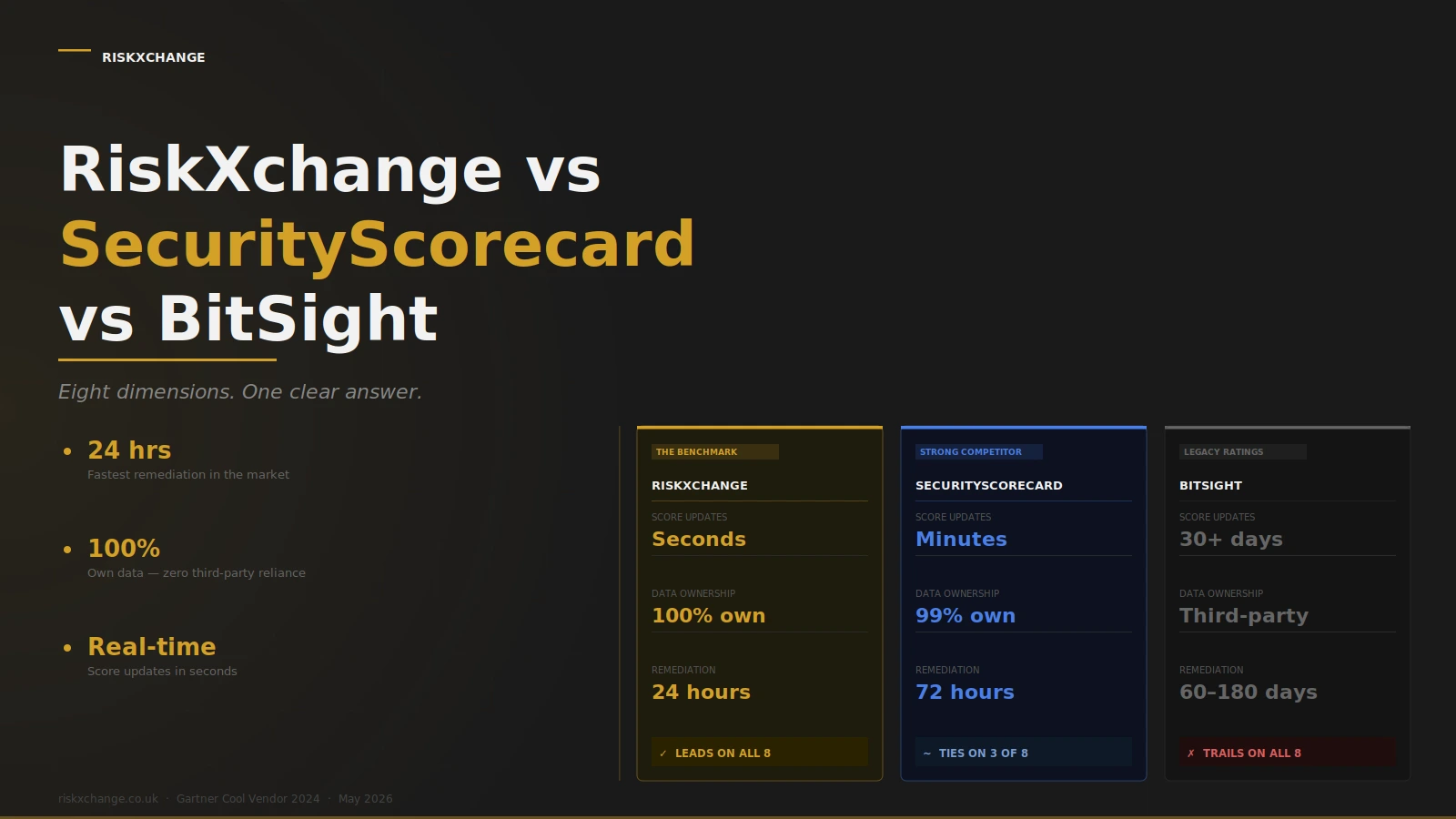 Risk Management
RiskXchange vs SecurityScorecard vs BitSight: Eight Dimensions That Actually Matter
RiskXchange, SecurityScorecard, and BitSight all claim to lead on data quality, AI, and speed. We measured all three across eight critical dimensions — from score freshness and remediation speed to data ownership and platform transparency. The results are clear: not all TPRM platforms are built the same.
Read more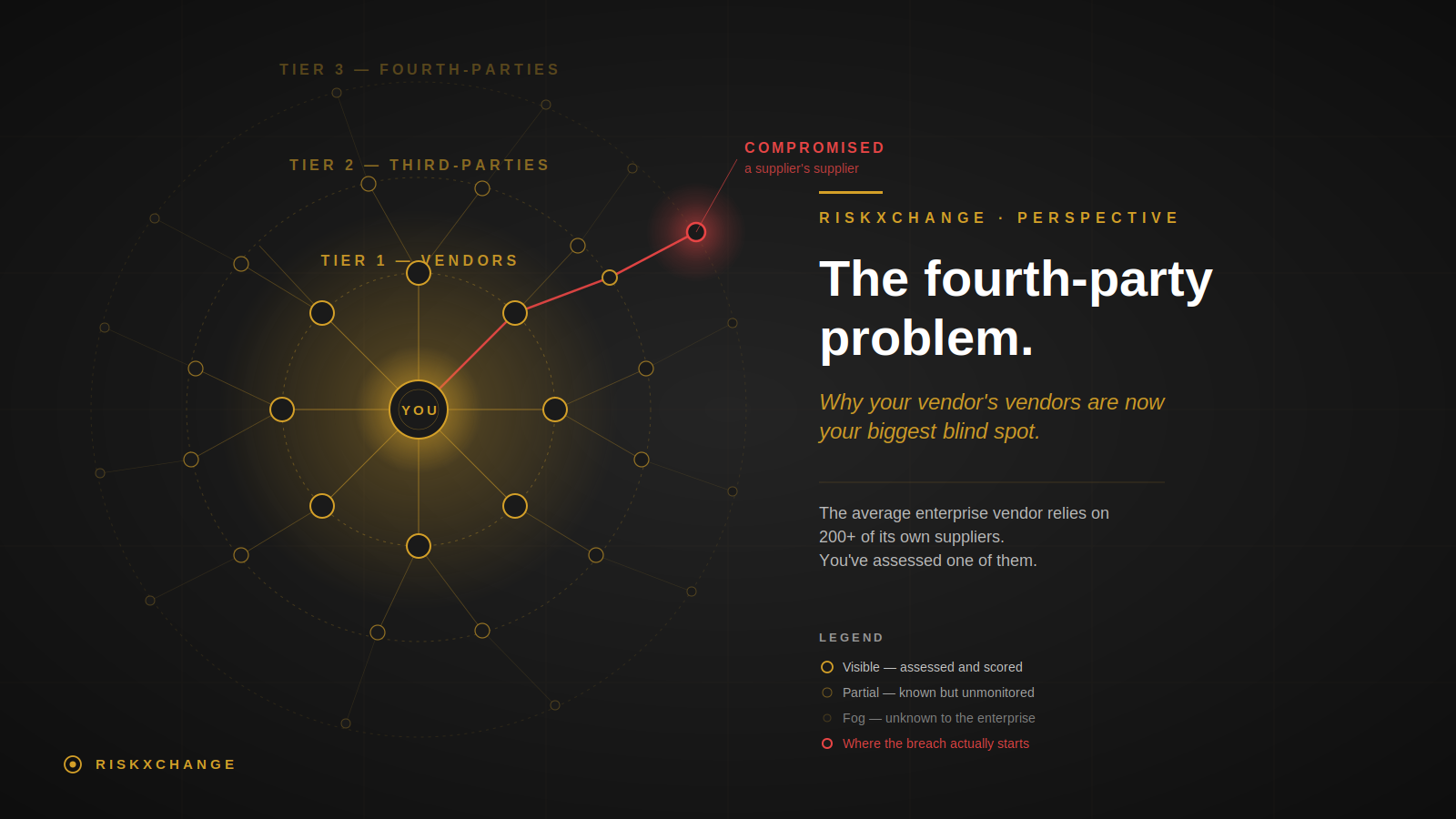 Risk Management
The Fourth-Party Problem: Why Your Vendor's Vendors Are Now Your Biggest Blind Spot
Most third-party risk programmes stop at tier one. The breach data says the attackers don't. Here's why fourth-party visibility is the defining TPRM challenge of 2026 — and what CISOs need to do about it.
Read more