Category: Cybersecurity.
Every article we've published under "Cybersecurity".
From the team.
 Cybersecurity
How to Measure Cybersecurity Risk: A Strategic Guide for 2026
Learn how to measure cybersecurity risk with our 2026 guide. Ditch subjective heat maps for data-driven models that quantify threats in real financial terms.
Read more Cybersecurity
What is cyber risk modeling
Cyber risk modeling is a data-driven method used to identify, assess, and quantify the financial impact of cyber threats on a company. Unlike traditional qualitative approaches, it translates technical risks into business language, enabling better decision-making and securing stakeholder buy-in. By integrating real-time threat intelligence, historical data, and cybersecurity trends, organizations can prioritize threats, allocate resources more effectively, and strengthen their risk mitigation strategies. RiskXchange offers cyber risk assessments that help organizations understand and manage their risk exposure.
Read more Cybersecurity
How to define sensitive data and the means of protecting it
Understanding and protecting sensitive data is essential in today’s threat landscape, where breaches increasingly target personal and confidential information. This guide outlines how to define sensitive data using the CIA triad—confidentiality, integrity, and availability—and highlights security measures like encryption, access controls, and vendor risk management. With third-party vulnerabilities rising, organisations must classify, monitor, and safeguard sensitive information—especially in cloud environments—to maintain compliance and prevent costly data breaches.
Read more Cybersecurity
Understanding the Cyber Risks of the LDAP Protocol
This article provides an in-depth overview of the Lightweight Directory Access Protocol (LDAP), explaining its critical role in directory access and authentication across networks. It highlights LDAP’s integration with Active Directory, its core operations, and common use cases, especially in enterprise environments. The article also explores authentication methods, supported platforms, and the cybersecurity risks associated with LDAP—particularly LDAP injection attacks—while offering practical prevention strategies. Finally, it outlines how RiskXchange enhances LDAP security through real-time risk monitoring and attack surface management.
Read more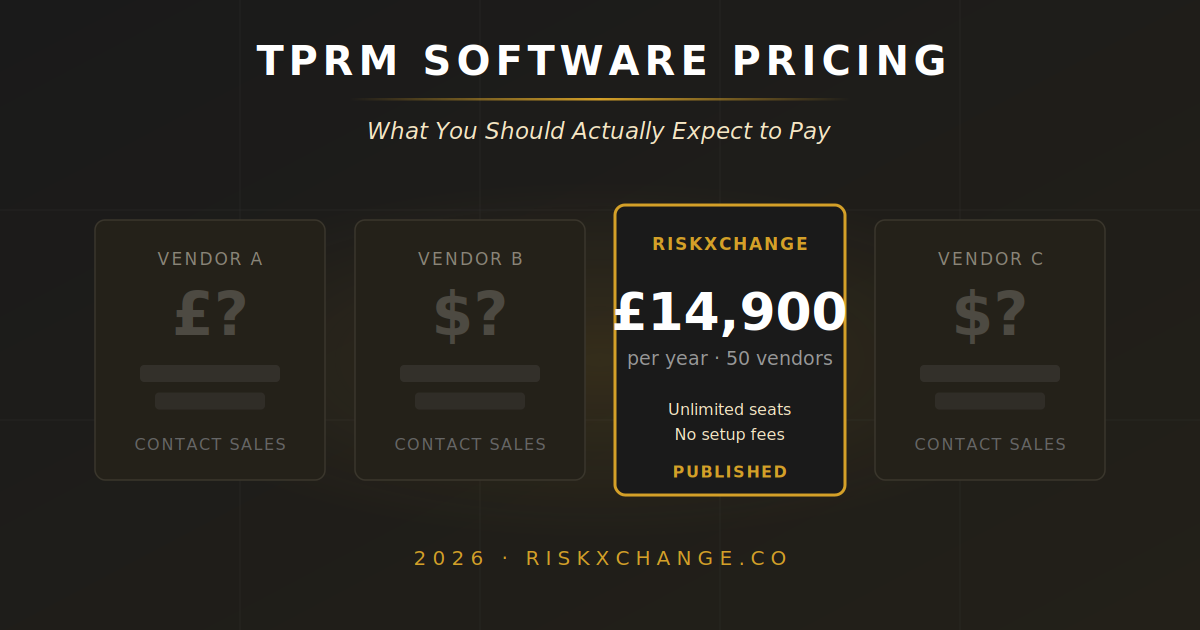 Risk Management
TPRM Software Pricing: What You Should Actually Expect to Pay in 2026
Almost every TPRM vendor hides its pricing. Here's what buyers actually pay in 2026 — real benchmark figures for SecurityScorecard, Bitsight, UpGuard and others, the hidden cost traps to negotiate away, and RiskXchange's published prices in full.
Read more Cybersecurity
IT Cybersecurity Risk Assessment: A Step by Step Guide
Cybercrime is on the rise, and a comprehensive cybersecurity risk assessment is essential for protecting your business. This guide outlines a step-by-step approach—from identifying valuable data and assessing access controls to evaluating potential threats and reviewing vulnerabilities. Regular assessments and strong security strategies can prevent breaches and reduce financial impact. With tools like RiskXchange’s real-time monitoring and security risk ratings, businesses gain visibility across their ecosystem to proactively manage risks and strengthen cybersecurity posture.
Read more Cybersecurity
What is integrity in cyber security?
Cybersecurity integrity ensures that data remains accurate, unaltered, and trustworthy. As part of the CIA triad—Confidentiality, Integrity, and Availability—it protects against unauthorized changes that can harm systems, finances, or reputations. Real-world breaches prove how critical this is. Maintaining integrity requires limiting access, separating duties, and rotating roles. Platforms like RiskXchange help businesses monitor and defend their data by offering full visibility and proactive protection against threats.
Read more Cybersecurity
Peer comparisons of cyber risk ratings: how they support your firm’s cyber assessment processes
Peer comparisons of cybersecurity risk ratings enable organisations to benchmark security performance, identify gaps, and optimise resource allocation. By aligning with industry standards, businesses can set targeted security goals, improve reporting accuracy, and enhance their overall cyber posture. RiskXchange empowers organisations with AI-driven, real-time insights to support proactive and strategic cybersecurity improvements.
Read more Compliance
Why use compliance monitoring as a part of your cybersecurity program?
Compliance monitoring is a vital part of any cybersecurity program, helping organisations ensure adherence to regulatory requirements and internal policies. With rising regulatory complexity across industries and jurisdictions, continuous monitoring plays a critical role in identifying and addressing compliance gaps. From PCI DSS to GDPR, businesses must align security controls with applicable laws. Key steps include conducting audits, risk assessments, and configuration management. Tools like cybersecurity risk ratings enhance visibility, while an effective compliance monitoring plan ensures proactive risk mitigation.
Read more Cybersecurity
What are cyber security controls?
Cybersecurity controls are essential countermeasures used to detect, prevent, and respond to cyber threats. This blog explains the importance of cybersecurity controls, how to assess and implement the right measures based on company size and IT assets, and outlines 8 critical controls every business should prioritise—from multifactor authentication to incident response planning. It also highlights how RiskXchange can help organisations adapt their cybersecurity strategies with tools like risk ratings, attack surface monitoring, and vendor risk management.
Read more Risk Management
Ensuring your organisation has superior cybersecurity monitoring is paramount today
Cybercrime is accelerating, and continuous cybersecurity monitoring is essential for real-time threat detection and risk mitigation. As attack surfaces expand with remote work and third-party vendors, organisations must adopt advanced monitoring practices to protect critical data. RiskXchange offers end-to-end visibility, compliance verification, and proactive security solutions that help businesses stay ahead of evolving cyber threats.
Read more Cybersecurity
All you need to know about ransomware attacks
Ransomware continues to be one of the most damaging cyber threats facing businesses and individuals alike. From scareware and screen lockers to encrypting ransomware, attackers are using increasingly sophisticated methods to lock systems and demand payment. Learn how ransomware spreads, its various forms, and how to avoid falling victim. Discover why working with cybersecurity experts like RiskXchange is essential for early detection, risk mitigation, and staying one step ahead of cybercriminals.
Read more Cybersecurity
How malware has evolved over time
Malware has transformed dramatically over the decades—from harmless pranks like The Creeper and Elk Cloner to sophisticated ransomware attacks like WannaCry and Lockbit. Key moments include the rise of phishing, the birth of botnets, the shift to cryptocurrency payments, and the emergence of ransomware-as-a-service. Understanding these milestones is crucial to defending against today’s evolving cyber threats.
Read more Risk Management
The True Cost of Delayed Remediation in Vendor Risk Management
Delayed remediation doesn’t just expose your organization to risk—it multiplies it. In this post, we break down the financial, regulatory, and reputational consequences of slow vendor risk response—and show how continuous monitoring and real-time remediation can help you stay audit-ready, resilient, and in control.
Read more Cybersecurity
1 in 4 Employees Loses their job after Compromising their company’s Security
New research reveals that 1 in 4 employees lost their job after compromising their company’s security, often due to phishing scams or sending emails to the wrong recipients. Workplace stress, distraction, and hybrid environments are major contributors to these mistakes. Companies can reduce risks by promoting regular breaks, minimizing cognitive fatigue, and educating employees on cybersecurity threats. RiskXchange offers solutions to strengthen data protection and mitigate cyber risks.
Read more Risk Management
Machine Learning for Vendor Risk Scoring: Moving Beyond Static Assessments in 2026
Traditional vendor risk assessments can't keep pace with today's threat landscape. Discover how machine learning for vendor risk scoring replaces static questionnaires with continuous, AI-driven monitoring, real-time security insights, and predictive risk intelligence—helping organisations strengthen third-party resilience, streamline vendor oversight, and make faster, data-driven decisions in 2026.
Read more Risk Management
Integrating TPRM with SIEM: A Strategic Guide for the Modern SOC
Learn how integrating TPRM with SIEM helps security teams turn vendor risk data into actionable threat intelligence. Discover how real-time risk ratings, automated alerts, and AI-driven monitoring improve incident response, reduce supply chain risk, and strengthen SOC operations with continuous third-party visibility.
Read more Risk Management
Continuous Third-Party Risk Monitoring: From Static Checklists to Real-Time Resilience
Continuous third-party risk monitoring has become essential in 2026 as annual vendor assessments leave organisations exposed to vulnerabilities for most of the year. With third parties now responsible for 30% of all data breaches and the average US breach cost reaching $10.22 million, static questionnaires and manual spreadsheets can no longer provide meaningful protection. This guide explores how AI-native monitoring frameworks deliver real-time visibility into vendor ecosystems, helping organisations identify technical risks, automate compliance evidence collection, and reduce alert fatigue through actionable intelligence. By shifting from periodic audits to continuous oversight, businesses can establish quantifiable security baselines, strengthen regulatory compliance, and build a resilient supply chain capable of adapting to an increasingly volatile threat landscape.
Read more Risk Management
RiskXchange vs SecurityScorecard: An Honest Comparison (2026)
SecurityScorecard rates your vendors. RiskXchange puts an AI workforce to work on them. We compare data, scoring, AI capability, regulatory coverage, pricing and fit — honestly, including where SecurityScorecard wins.
Read more Risk Management
ESG and Cybersecurity Risk: Integrating Digital Resilience into Governance in 2026
Cybersecurity has become a core pillar of ESG governance in 2026, with regulations like DORA, CSRD, and the EU Cyber Resilience Act forcing organisations to treat digital resilience as a measurable governance standard. This guide explores how to integrate ESG and cybersecurity risk into a unified strategy using continuous monitoring, Cybersecurity Ratings, and real-time supply chain visibility. Learn how to eliminate third-party blind spots, automate compliance, and build board-level confidence through data-driven governance.
Read more Risk Management
Overcoming the Critical Challenges in Third-Party Risk Management for 2026
Third-party risk management in 2026 is struggling under the weight of growing vendor ecosystems, rising breach costs, and blind spots in N-th party dependencies. Static questionnaires and annual audits are no longer enough. This article outlines how organisations can overcome these challenges by shifting to AI-native, continuous monitoring that delivers real-time visibility, reduces alert fatigue, and strengthens overall supply chain resilience.
Read more Cybersecurity
What are the Risks of Emerging Technologies in Cyber Security?
Emerging technologies are revolutionizing the digital world but also increasing cybersecurity risks. As businesses adopt innovations like AI, IoT, and mobile platforms, they become more vulnerable to sophisticated cyber threats such as data breaches, cryptojacking, cross-site scripting, and insider attacks. These risks grow as more data is digitized and shared online, expanding the attack surface. Cybercriminals now exploit new technologies to launch advanced attacks, while organizations must leverage emerging cybersecurity tools to detect, prevent, and respond to threats effectively. To stay secure, companies need proactive strategies that align with evolving tech and threat landscapes.
Read more Cybersecurity
Social engineering attacks: What is a whaling attack?
Whaling attacks are highly targeted social engineering attacks aimed at executives, using convincing spoofed emails to steal money or sensitive information. Cases like FACC and Seagate show the severe financial and reputational damage whaling can cause. As remote work rises, so does the frequency of these attacks. To mitigate risks, businesses must train executives, strengthen email authentication (DNSSEC, DMARC, DKIM, SPF), enforce verification protocols, and improve vendor security. Strengthening cybersecurity measures and verification processes is critical to defending against whaling attacks.
Read more Cybersecurity
NIDS Intrusion Detection: Protecting the Network Perimeter in 2026
NIDS intrusion detection has become a critical layer for maintaining real-time visibility across modern, hybrid networks. This guide explains how organisations in 2026 can use NIDS to monitor raw traffic, detect lateral movement, and uncover threats that bypass traditional perimeter controls. Learn how to balance signature and anomaly-based detection, optimise sensor placement across cloud environments, and integrate network insights into a broader, risk-driven security strategy.
Read more