From the team.
 Compliance
The Essentials of Modern Cybersecurity Law: A 2026 Regulatory Guide
Cybersecurity law in 2026 has shifted from voluntary frameworks to enforceable mandates that demand continuous, real-time oversight. This guide breaks down global regulations like NIS2, DORA, and CIRCIA, and shows how to move from static compliance to a legally defensible, data-driven security posture across your entire supply chain.
Read more Cybersecurity
Ransomware Examples: Analyzing Modern Extortion and Supply Chain Vulnerabilities in 2026
Ransomware in 2026 has evolved into a multi-stage, supply chain-driven threat that exploits third-party vulnerabilities and uses AI-powered extortion tactics. By analysing modern ransomware examples, organisations can shift from reactive defence to proactive, continuous risk monitoring—gaining the outside-in visibility needed to quantify exposure, reduce attack surface risk, and strengthen overall cybersecurity resilience.
Read more Risk Management
Third-Party Attack Surface Discovery: Securing the Extended Enterprise
Third-party attack surface discovery gives enterprises real-time visibility into the hidden vulnerabilities across their vendor ecosystem. By moving beyond static questionnaires and leveraging AI-native continuous monitoring, organizations can identify shadow IT, map fourth-party dependencies, and establish quantifiable security ratings for every partner. This guide explains how discovery-led TPRM helps security teams reduce supply chain risk, improve remediation workflows, and meet evolving compliance demands such as DORA and NIS2 with confidence.
Read more Risk Management
How to Create a Cybersecurity Incident Response Plan?
A cybersecurity incident response plan (CSIRP) is essential for businesses to respond quickly and effectively to cyberattacks, minimizing damage and ensuring recovery. This blog post outlines the six phases of a CSIRP, including preparation, identification, containment, eradication, recovery, and lessons learned. It also covers the importance of assembling an incident response team, identifying vulnerabilities, and regularly testing and updating the plan. Additionally, it highlights how RiskXchange supports businesses in strengthening their cybersecurity efforts and incident response capabilities.
Read more Risk Management
ESG Risk Management: A Strategic Framework for Supply Chain Resilience in 2026
ESG risk management in 2026 requires a shift from static reporting to continuous, AI-driven monitoring that provides real-time visibility across the entire supply chain. By integrating environmental, social, and governance metrics with cybersecurity ratings, organisations can eliminate blind spots, automate compliance, and transform ESG from a reporting obligation into a measurable driver of resilience and strategic advantage.
Read more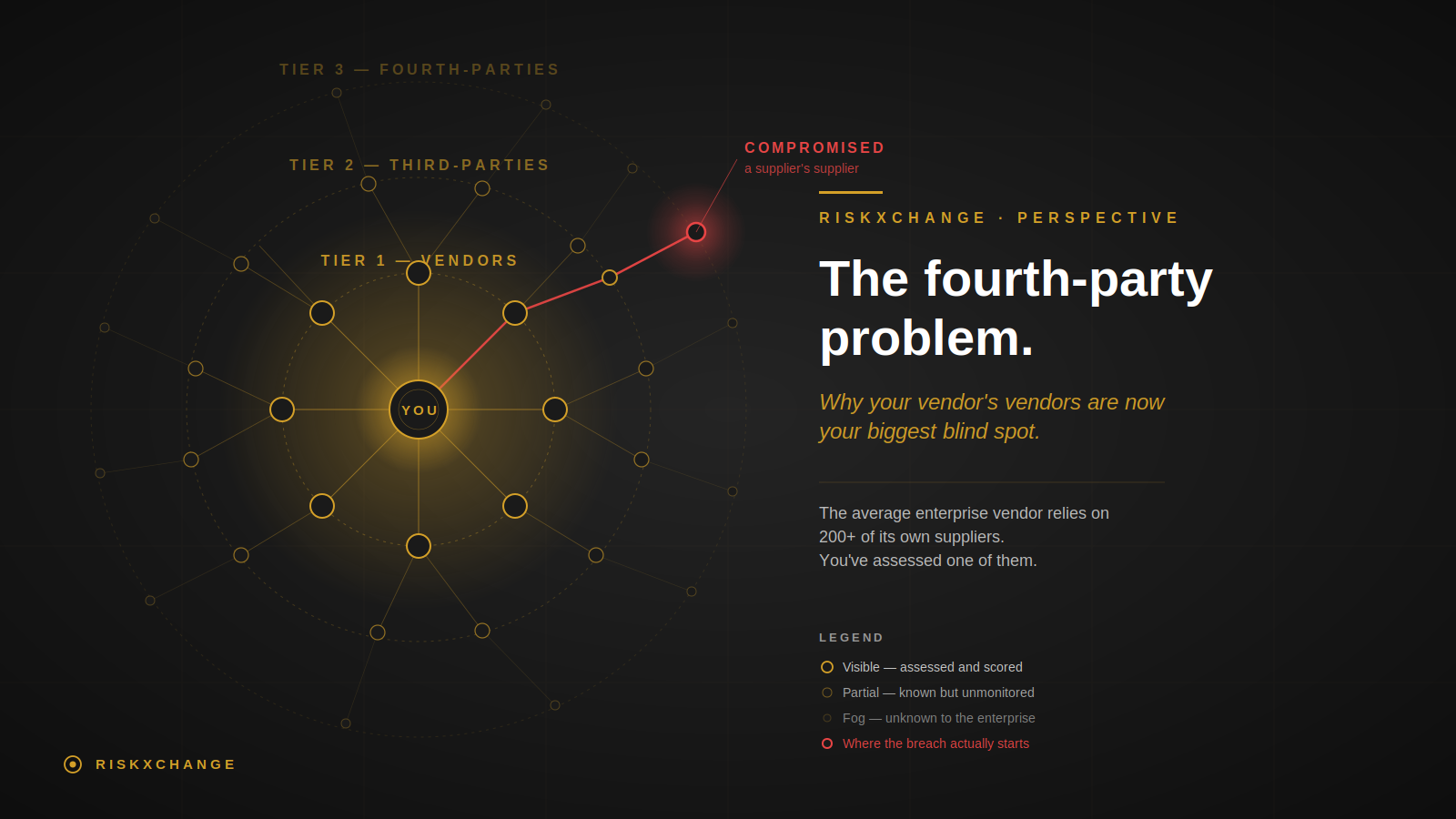 Risk Management
The Fourth-Party Problem: Why Your Vendor's Vendors Are Now Your Biggest Blind Spot
Most third-party risk programmes stop at tier one. The breach data says the attackers don't. Here's why fourth-party visibility is the defining TPRM challenge of 2026 — and what CISOs need to do about it.
Read more