Category: Risk Management.
Every article we've published under "Risk Management".
From the team.
 Risk Management
How to Create a Cybersecurity Incident Response Plan?
A cybersecurity incident response plan (CSIRP) is essential for businesses to respond quickly and effectively to cyberattacks, minimizing damage and ensuring recovery. This blog post outlines the six phases of a CSIRP, including preparation, identification, containment, eradication, recovery, and lessons learned. It also covers the importance of assembling an incident response team, identifying vulnerabilities, and regularly testing and updating the plan. Additionally, it highlights how RiskXchange supports businesses in strengthening their cybersecurity efforts and incident response capabilities.
Read more Risk Management
Cybersecurity Threats Impacting the Pharmaceutical Industry
This article explores the top cybersecurity threats impacting the pharmaceutical industry, including ransomware, phishing, third-party vendor risks, IoT vulnerabilities, and employee negligence. As pharmaceutical companies increasingly rely on digital technologies and third-party providers, the need for robust cybersecurity strategies has never been more urgent. RiskXchange offers real-time visibility and risk ratings to help pharmaceutical businesses proactively manage cyber threats and protect sensitive data and intellectual property.
Read more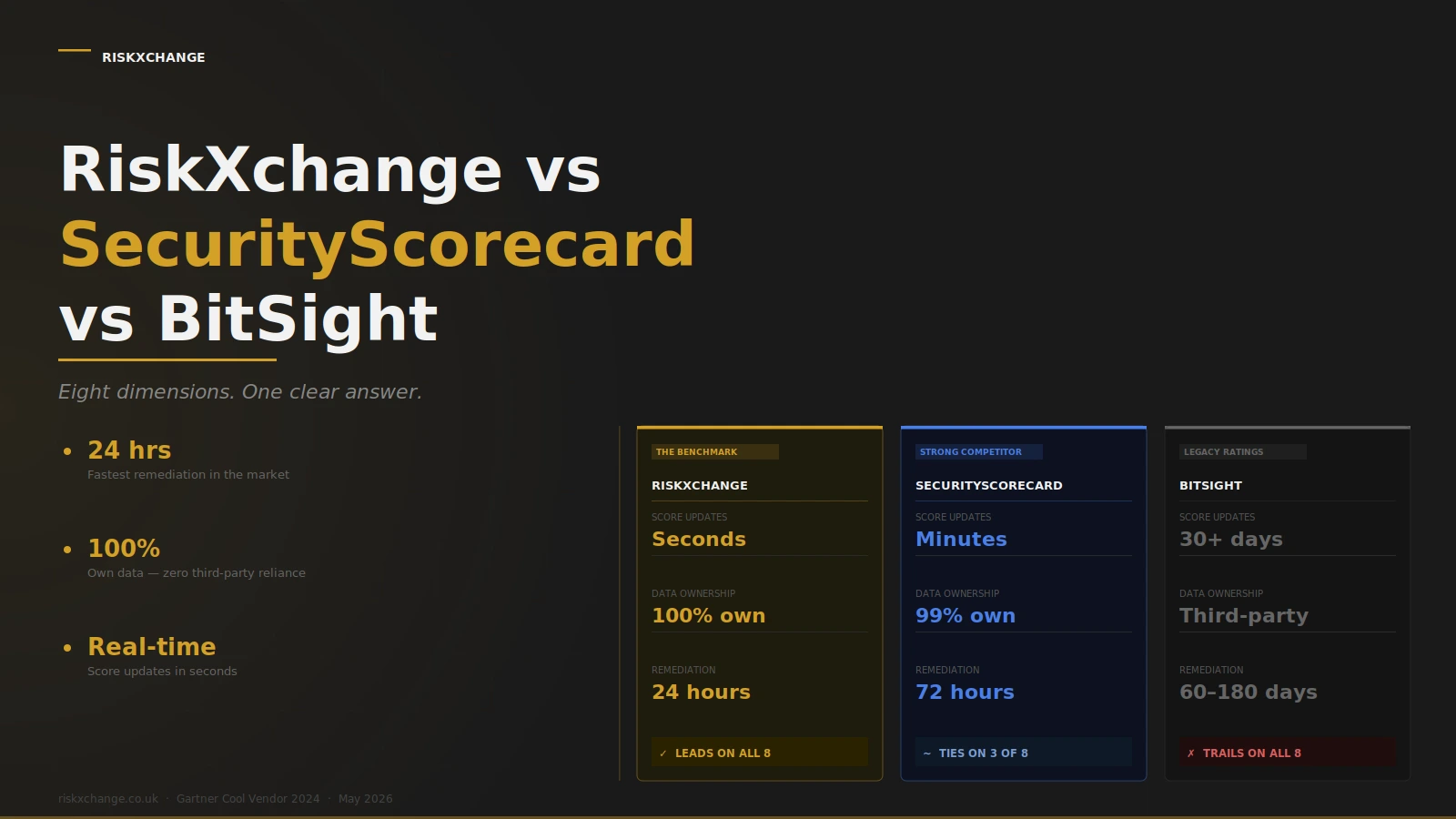 Risk Management
RiskXchange vs SecurityScorecard vs BitSight: Eight Dimensions That Actually Matter
RiskXchange, SecurityScorecard, and BitSight all claim to lead on data quality, AI, and speed. We measured all three across eight critical dimensions — from score freshness and remediation speed to data ownership and platform transparency. The results are clear: not all TPRM platforms are built the same.
Read more Risk Management
ESG Risk Management: A Strategic Framework for Supply Chain Resilience in 2026
ESG risk management in 2026 requires a shift from static reporting to continuous, AI-driven monitoring that provides real-time visibility across the entire supply chain. By integrating environmental, social, and governance metrics with cybersecurity ratings, organisations can eliminate blind spots, automate compliance, and transform ESG from a reporting obligation into a measurable driver of resilience and strategic advantage.
Read more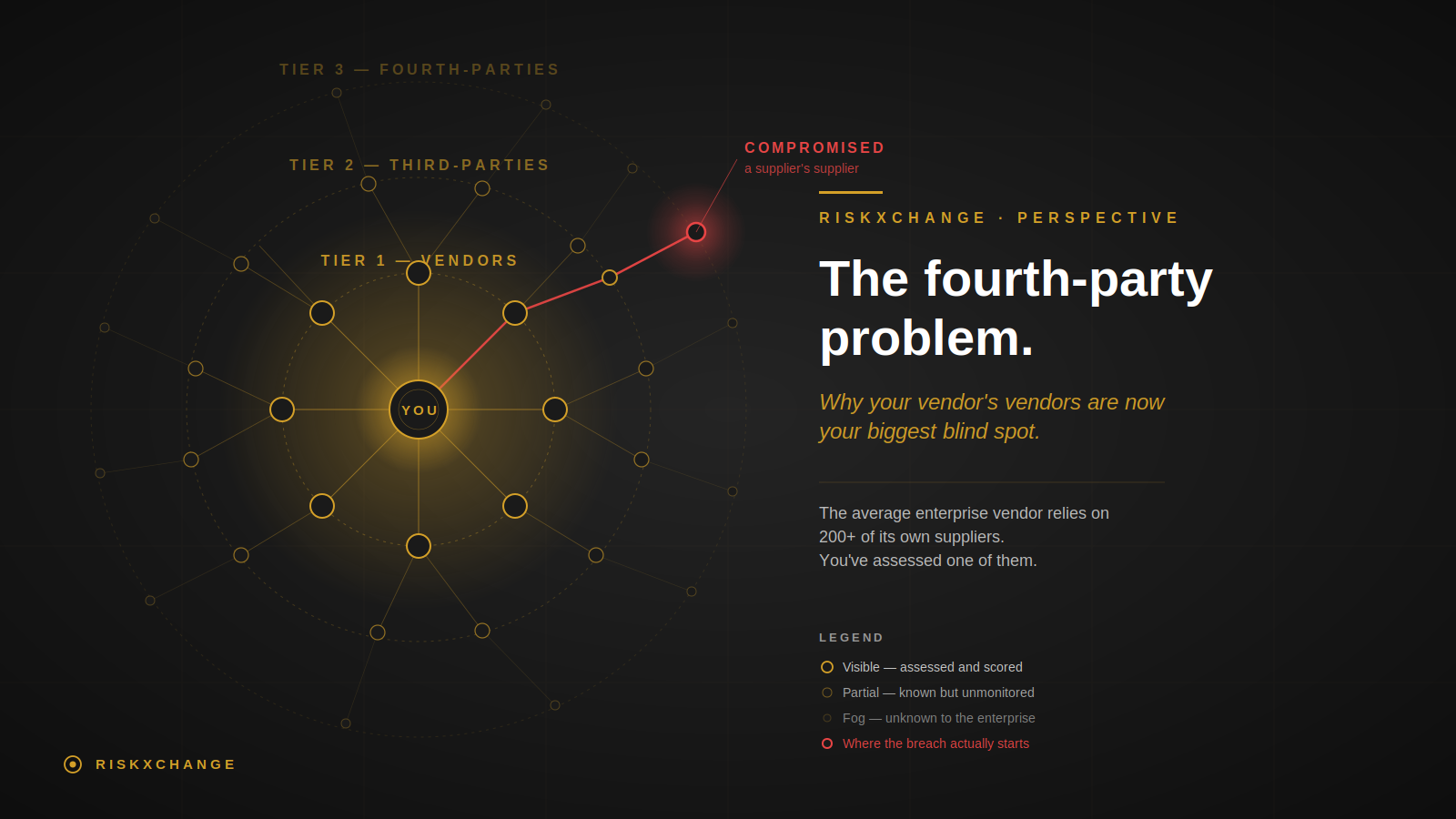 Risk Management
The Fourth-Party Problem: Why Your Vendor's Vendors Are Now Your Biggest Blind Spot
Most third-party risk programmes stop at tier one. The breach data says the attackers don't. Here's why fourth-party visibility is the defining TPRM challenge of 2026 — and what CISOs need to do about it.
Read more Risk Management
What Is a Cyber Attack Surface? The Definitive Guide to Modern Exposure Management
What is a cyber attack surface? It’s every visible entry point across your digital ecosystem, from cloud assets and shadow IT to third-party vendors and exposed APIs. This guide explains how modern exposure management works, why continuous monitoring matters, and how to reduce risk using AI-driven attack surface management and Cybersecurity Ratings.
Read more