Category: Risk Management.
Every article we've published under "Risk Management".
From the team.
 Risk Management
ESG and Cybersecurity Risk: Integrating Digital Resilience into Governance in 2026
Cybersecurity has become a core pillar of ESG governance in 2026, with regulations like DORA, CSRD, and the EU Cyber Resilience Act forcing organisations to treat digital resilience as a measurable governance standard. This guide explores how to integrate ESG and cybersecurity risk into a unified strategy using continuous monitoring, Cybersecurity Ratings, and real-time supply chain visibility. Learn how to eliminate third-party blind spots, automate compliance, and build board-level confidence through data-driven governance.
Read more Risk Management
Overcoming the Critical Challenges in Third-Party Risk Management for 2026
Third-party risk management in 2026 is struggling under the weight of growing vendor ecosystems, rising breach costs, and blind spots in N-th party dependencies. Static questionnaires and annual audits are no longer enough. This article outlines how organisations can overcome these challenges by shifting to AI-native, continuous monitoring that delivers real-time visibility, reduces alert fatigue, and strengthens overall supply chain resilience.
Read more Risk Management
Enterprise Third-Party Risk Management: The 2026 Strategic Framework
Enterprise third-party risk management has evolved beyond annual vendor assessments into a continuous, AI-driven discipline. Learn how to unify cybersecurity, ESG, compliance, and data privacy within a single framework, automate vendor monitoring, and use real-time security ratings to strengthen supply chain resilience, simplify regulatory compliance, and proactively manage third-party risk at scale.
Read more Risk Management
Remediated vs Mitigated – Know the Difference
Remediation and mitigation are key cybersecurity strategies. Remediation fully eliminates a threat, while mitigation reduces its impact when a fix isn’t possible. Both rely on risk assessments and are essential for managing vulnerabilities. Automation and best practices—like regular updates, access control, and network monitoring—enhance effectiveness. RiskXchange supports both processes by helping businesses identify, manage, and reduce cyber risks across their attack surface and third-party ecosystem.
Read more Risk Management
Digital Footprint Analysis: The 'Outside-In' Guide for Enterprise Security in 2026
Digital footprint analysis in 2026 shifts security from internal guesswork to external clarity. By adopting an outside-in perspective, organisations can uncover hidden assets, eliminate shadow IT, and gain real-time visibility into their entire attack surface—including third-party risks. This guide outlines a practical framework to transform fragmented data into actionable intelligence, helping security teams move from reactive defence to continuous, data-driven resilience.
Read more Risk Management
What is GRC? The Executive Guide to Governance, Risk, and Compliance in 2026
Discover what GRC means in 2026 and how modern, AI-driven strategies transform governance, risk, and compliance into a unified, real-time capability. Learn how to eliminate data silos, strengthen supply chain resilience, and turn compliance into a measurable competitive advantage.
Read more Risk Management
Cyber Risk Quantification (CRQ): A Strategic Guide for 2026
Cyber Risk Quantification (CRQ) is transforming how security leaders communicate risk in 2026 by translating technical vulnerabilities into clear financial impact. This guide explores how to move beyond subjective scoring, adopt the FAIR model, and use real-time data to align cybersecurity investments with measurable business outcomes.
Read more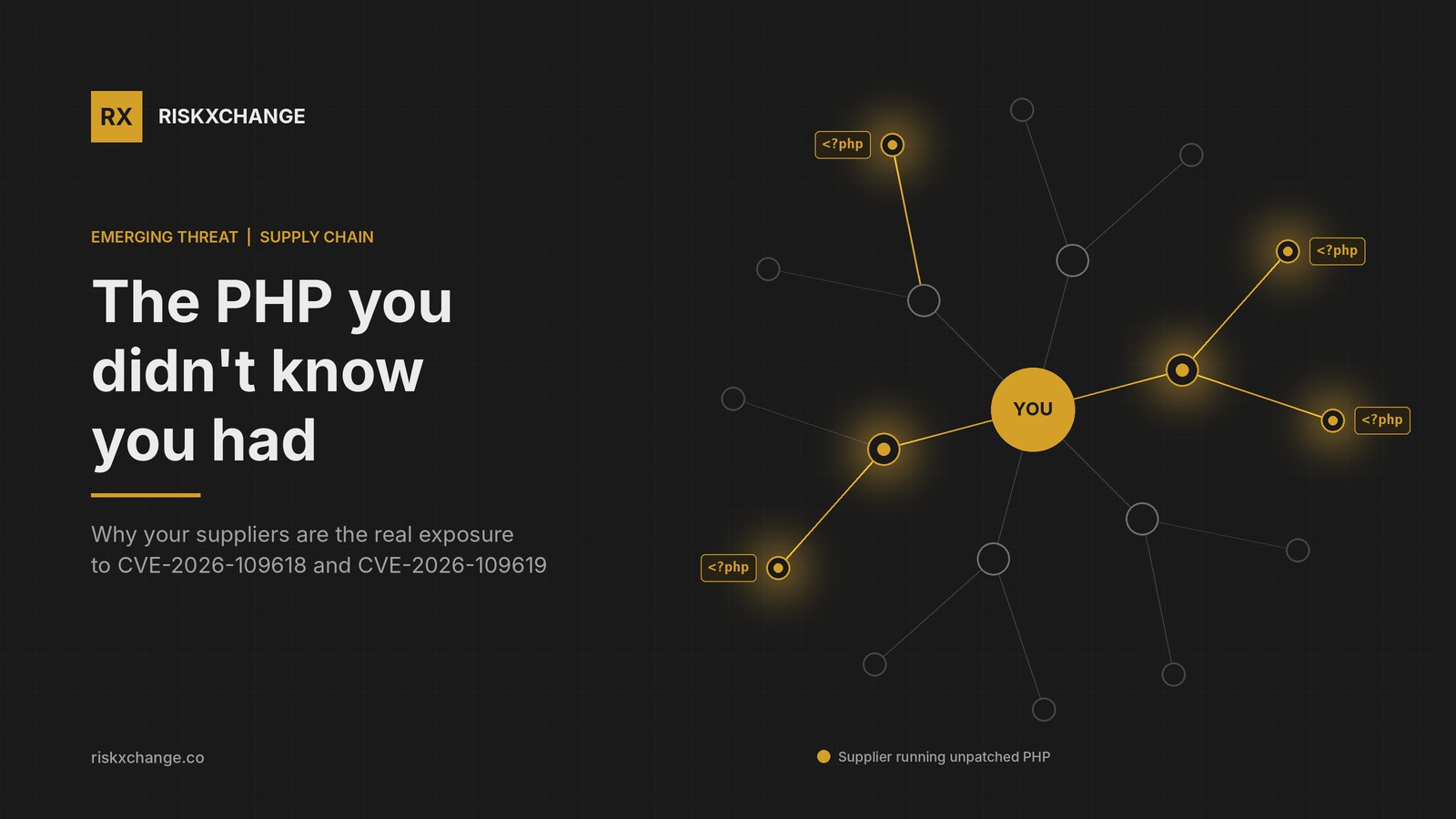 Risk Management
The PHP You Didn't Know You Had: Why Your Suppliers Are the Real Exposure
Two critical PHP flaws, CVE-2026-109618 and CVE-2026-109619, let attackers run code on unpatched web servers. Patching your own estate is only half the job. The bigger risk is the PHP buried inside your suppliers’ portals, appliances and SaaS platforms, which no annual questionnaire will ever show you. Here’s what to ask them this week.
Read more Risk Management
Vendor due diligence: what to assess before you sign
Vendor due diligence is the assessment you run before you sign, while you still have leverage. What to assess, how deep to go, and how it connects to onboarding.
Read more Risk Management
Streamlining Third-Party Compliance Management: The 2026 Enterprise Guide
Streamlining third-party compliance management requires moving beyond static questionnaires and adopting continuous, AI-driven oversight across the vendor lifecycle. This guide explores how enterprises can reduce manual workload, automate evidence mapping across frameworks like DORA and GDPR, and use real-time security ratings to transform compliance into a measurable resilience strategy. Learn how AI-native TPRM platforms help organisations gain full supply chain visibility, improve remediation workflows, and maintain proactive control over evolving third-party risks.
Read more Risk Management
What Is a Security Rating Score? A Comprehensive Guide for 2026
Learn what a security rating score is and why it has become a critical benchmark for digital trust and resilience in 2026. Discover how AI-native platforms analyse external risk signals, quantify cybersecurity posture, and help organisations strengthen third-party risk management, improve board reporting, and maintain continuous visibility across their entire digital attack surface.
Read more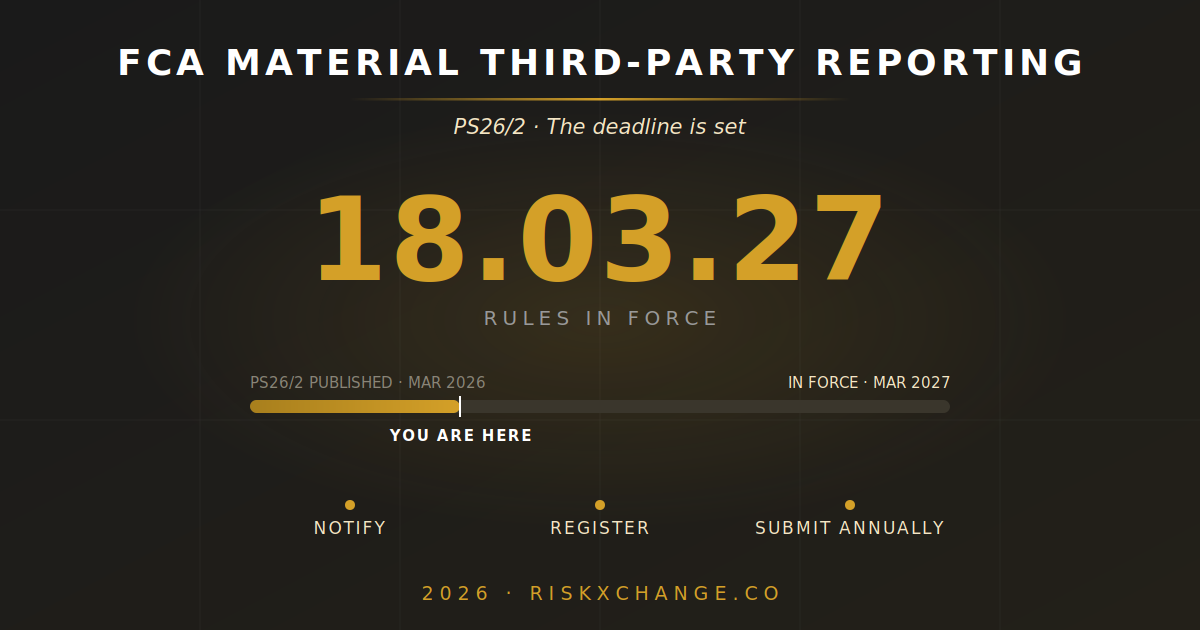 Risk Management
FCA Material Third-Party Reporting: Preparing for the March 2027 Deadline
The FCA's material third-party reporting rules under PS26/2 come into force on 18 March 2027. Here's who's in scope, what counts as "material", what the register demands, and a month-by-month preparation plan that starts now.
Read more Risk Management
The Comprehensive Vendor Risk Assessment Checklist for 2026
A modern vendor risk assessment checklist for 2026 goes beyond static questionnaires to deliver continuous, data-driven visibility into your third-party ecosystem. This guide outlines how to replace manual processes with real-time monitoring, tier vendors effectively, and use cybersecurity ratings to reduce supply chain risk and strengthen operational resilience.
Read more Risk Management
The Definitive Guide to Computer Security Certifications in 2026
In 2026, computer security certifications have evolved from simple credentials into strategic assets that validate real-world risk management capabilities. This guide breaks down the most valuable certifications, from foundational to expert level and shows how to align them with career growth, organisational resilience, and measurable cybersecurity outcomes. Learn how to choose the right path, maximise ROI on your certifications, and combine certified expertise with continuous risk monitoring to stay ahead in an AI-driven threat landscape.
Read more Risk Management
The Financial Impact of Supply Chain Attacks in 2026: A Strategic Analysis
The financial impact of supply chain attacks in 2026 extends far beyond immediate breach recovery costs. This strategic analysis explores how AI-driven threats, fourth-party vulnerabilities, and evolving regulations like DORA are reshaping enterprise risk. Learn how to quantify hidden financial exposure, reduce operational disruption, and strengthen resilience through continuous, AI-native third-party risk management.
Read more Risk Management
What is a COBIT framework?
COBIT (Control Objectives for Information and Related Technology) is a globally recognized framework for the governance and management of enterprise IT. Developed by ISACA, it helps organizations align business risks with technical issues and control requirements. COBIT provides a structured model for ensuring the quality, control, and reliability of information systems. The framework is process-based, focusing on domains like planning, organization, delivery, and evaluation. COBIT includes principles to guide the development of governance systems tailored to an enterprise's needs. COBIT 2019 introduces updates such as new governing principles, expanded governance objectives, and integration with other standards. RiskXchange can help organizations implement cybersecurity frameworks like COBIT to improve risk management and cybersecurity posture.
Read more Risk Management
The Cascading Consequences of Poor Vendor Security: An Enterprise Guide for 2026
Poor vendor security can lead to costly data breaches, operational disruption, regulatory penalties, and lasting reputational damage. Discover the key consequences of third-party security failures in 2026 and learn how continuous monitoring, real-time risk intelligence, and AI-driven vendor risk management can help organisations strengthen supply chain resilience and maintain stakeholder trust.
Read more Risk Management
Predictive Risk Intelligence Platforms: The 2026 Guide to Proactive Security
Traditional third-party risk assessments can't keep pace with today's evolving cyber threats. Discover how predictive risk intelligence platforms use AI, machine learning, and continuous attack surface monitoring to forecast vendor risk, strengthen supply chain resilience, automate third-party risk management, and support compliance with frameworks like NIST CSF 2.0 and ISO 31000 in 2026.
Read more Risk Management
The Importance of Cybersecurity Due Diligence
Cybersecurity due diligence is essential for identifying and mitigating cyber risks from third- and fourth-party vendors, especially during mergers, acquisitions, and insurance assessments. It involves evaluating an organisation’s security posture, identifying vulnerabilities, and continuously monitoring risk through tools like security ratings. Platforms like RiskXchange offer streamlined, real-time solutions to manage and improve cyber risk performance.
Read more Risk Management
How to Improve Supply Chain Cybersecurity Posture: A Strategic Framework for 2026
Improving supply chain cybersecurity posture in 2026 requires more than static audits and manual questionnaires. This guide explores a strategic AI-native framework built around continuous monitoring, real-time security ratings, and proactive vendor oversight. Learn how leading enterprises strengthen resilience, reduce third-party risk exposure, improve remediation speed, and transform cybersecurity posture into a measurable benchmark that supports insurance, compliance, and long-term business trust.
Read more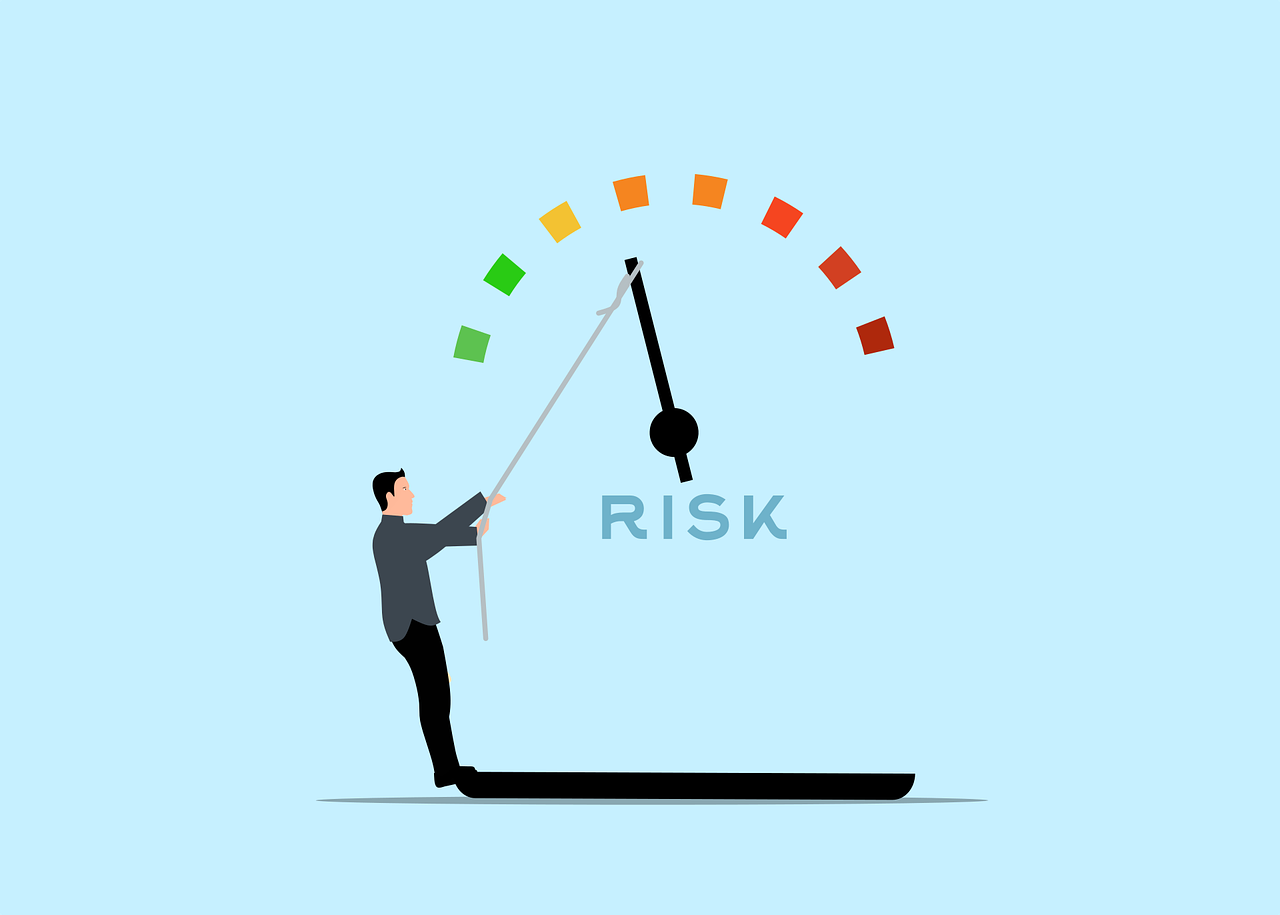 Risk Management
What is cyber security risk mitigation?
Cyber security risk mitigation involves proactive strategies to reduce the impact and likelihood of cyber threats. Key methods include continuous monitoring, access control, third-party risk management, network segmentation, and recovery planning. These practices help businesses safeguard IT infrastructure, prevent financial loss, ensure regulatory compliance, and protect their reputation. By adopting tools like multifactor authentication, antivirus software, and updated patch management, organisations can better prepare for and respond to cyberattacks.
Read more Risk Management
How to Automate Vendor Questionnaires: A Strategic Guide for 2026
Manual vendor questionnaires are slowing down risk management and creating dangerous visibility gaps across the supply chain. This guide explores how to automate vendor questionnaires using AI-driven workflows, real-time validation, and continuous monitoring to reduce onboarding delays, improve data accuracy, and strengthen third-party risk management. Learn how to move beyond spreadsheets and build a scalable, resilient vendor assessment programme for 2026 and beyond.
Read more Risk Management
The Definitive Guide to Third-Party Cyber Risk Assessment Questionnaires in 2026
A third-party cyber risk assessment questionnaire is no longer enough to manage modern supply chain risk. In 2026, organizations must move beyond static vendor assessments and embrace continuous, AI-driven risk intelligence. This guide explores how to build a scalable, defensible assessment process, validate vendor claims with real-world security data, and align third-party risk management with frameworks such as NIST CSF 2.0 and DORA.
Read more Risk Management
The Link between Compliance and Risk Management in Cybersecurity
Compliance and risk management are two interconnected pillars of cybersecurity. While compliance ensures regulatory requirements are met, risk management addresses potential threats proactively. Aligning both functions creates a stronger, more resilient security framework. RiskXchange enables this alignment through real-time monitoring, automated assessments, and third-party risk management tools.
Read more