Category: Compliance.
Every article we've published under "Compliance".
From the team.
 Risk Management
The Definitive Guide to Third-Party Cyber Risk Assessment Questionnaires in 2026
A third-party cyber risk assessment questionnaire is no longer enough to manage modern supply chain risk. In 2026, organizations must move beyond static vendor assessments and embrace continuous, AI-driven risk intelligence. This guide explores how to build a scalable, defensible assessment process, validate vendor claims with real-world security data, and align third-party risk management with frameworks such as NIST CSF 2.0 and DORA.
Read more Risk Management
The Link between Compliance and Risk Management in Cybersecurity
Compliance and risk management are two interconnected pillars of cybersecurity. While compliance ensures regulatory requirements are met, risk management addresses potential threats proactively. Aligning both functions creates a stronger, more resilient security framework. RiskXchange enables this alignment through real-time monitoring, automated assessments, and third-party risk management tools.
Read more Risk Management
Mastering Vendor Risk Assessment Workflow Automation in 2026
Discover how vendor risk assessment workflow automation helps organisations replace manual assessments with AI-driven workflows, continuous monitoring, and real-time security ratings. Learn how to automate vendor onboarding, reduce questionnaire fatigue, strengthen compliance, and build a scalable third-party risk management programme in 2026.
Read more Risk Management
Justifying Cybersecurity Budget to the CFO: A Strategic Guide for 2026
Cybersecurity leaders can no longer justify budget requests using technical jargon and subjective risk heat maps. In 2026, CFOs demand measurable financial impact, especially as U.S. breach costs climb to $10.22 million and cyber insurance premiums continue rising. This guide explores how to translate cybersecurity investments into business language using Cybersecurity Ratings, Annualized Loss Expectancy (ALE), and real-time third-party risk intelligence. Learn how to position cybersecurity as a strategic investment in capital preservation, operational resilience, and supply chain continuity rather than a reactive cost centre.
Read more Compliance
Continuous Vendor Security Monitoring: Closing the 364-Day Blind Spot
Continuous vendor security monitoring eliminates the “364-day blind spot” created by outdated annual assessments, replacing static questionnaires with real-time, AI-driven visibility. In a landscape where most breaches originate from third parties, organisations must adopt an outside-in approach, using automated intelligence, cybersecurity ratings, and tiered monitoring to detect and remediate risks instantly. This guide shows how to transform vendor risk management into a proactive, data-driven system that strengthens resilience and meets modern regulatory demands like DORA.
Read more Compliance
Supply Chain Cybersecurity Framework: The Definitive 2026 Guide for CISOs
A modern supply chain cybersecurity framework is no longer about periodic vendor audits—it’s about continuous, real-time visibility across your entire digital ecosystem. In 2026, rising threats and stricter mandates like NIS2 and CMMC 2.0 require CISOs to move beyond static compliance and adopt AI-driven monitoring, cybersecurity ratings, and an outside-in perspective. This guide outlines how to build a resilient, data-driven framework that secures not just your direct vendors, but every layer of your supply chain.
Read more Risk Management
Third-Party Risk Management Case Studies: Lessons from Successes and Failures in 2026
Third-party risk management case studies in 2026 reveal a clear divide between organizations relying on outdated assessments and those achieving real-time resilience through AI-native oversight. This guide explores major breach post-mortems, successful DORA compliance strategies, and the measurable ROI of continuous monitoring. Learn how leading enterprises reduce incident response times, strengthen Nth-party visibility, and transform vendor risk into a trackable, data-driven benchmark for proactive supply chain security.
Read more Risk Management
TPRM for Healthcare Organizations: A Strategic Guide to Patient Data Safety
Most healthcare breaches now originate through third-party vendors, yet many organizations still rely on outdated annual assessments that leave critical blind spots across telehealth platforms, cloud providers, and connected medical devices. This strategic guide explores how healthcare providers can modernize TPRM through continuous AI-driven monitoring, real-time Cybersecurity Ratings, and automated HIPAA compliance workflows. Learn how to reduce vendor-related risk, strengthen patient data protection, and build a scalable framework for resilient healthcare supply chain security in 2026.
Read more Risk Management
TPRM Program Implementation Guide: A Strategic Blueprint for 2026
Build a scalable third-party risk management programme with this 2026 TPRM implementation guide. Learn how to establish governance, tier vendors, automate assessments, integrate continuous monitoring, and leverage AI-driven risk intelligence to strengthen compliance, improve visibility, and protect your supply chain.
Read more Compliance
What is the NIST framework?
The NIST Cybersecurity Framework, developed by the U.S. National Institute of Standards and Technology, provides a flexible, risk-based approach to managing cybersecurity threats. It outlines five core functions—Identify, Protect, Detect, Respond, and Recover—designed to enhance critical infrastructure protection. The framework supports organisations of all sizes in evaluating current cybersecurity posture, setting goals, and aligning security strategies with business objectives. RiskXchange helps businesses adopt and tailor the NIST framework for optimal protection across their enterprise and vendor ecosystems.
Read more Compliance
How to implement NIS2 vendor monitoring in your organisation
NIS2 Article 21(2)(d) requires measures covering each direct supplier. Here is how to turn that obligation into a process that works at real supplier counts.
Read more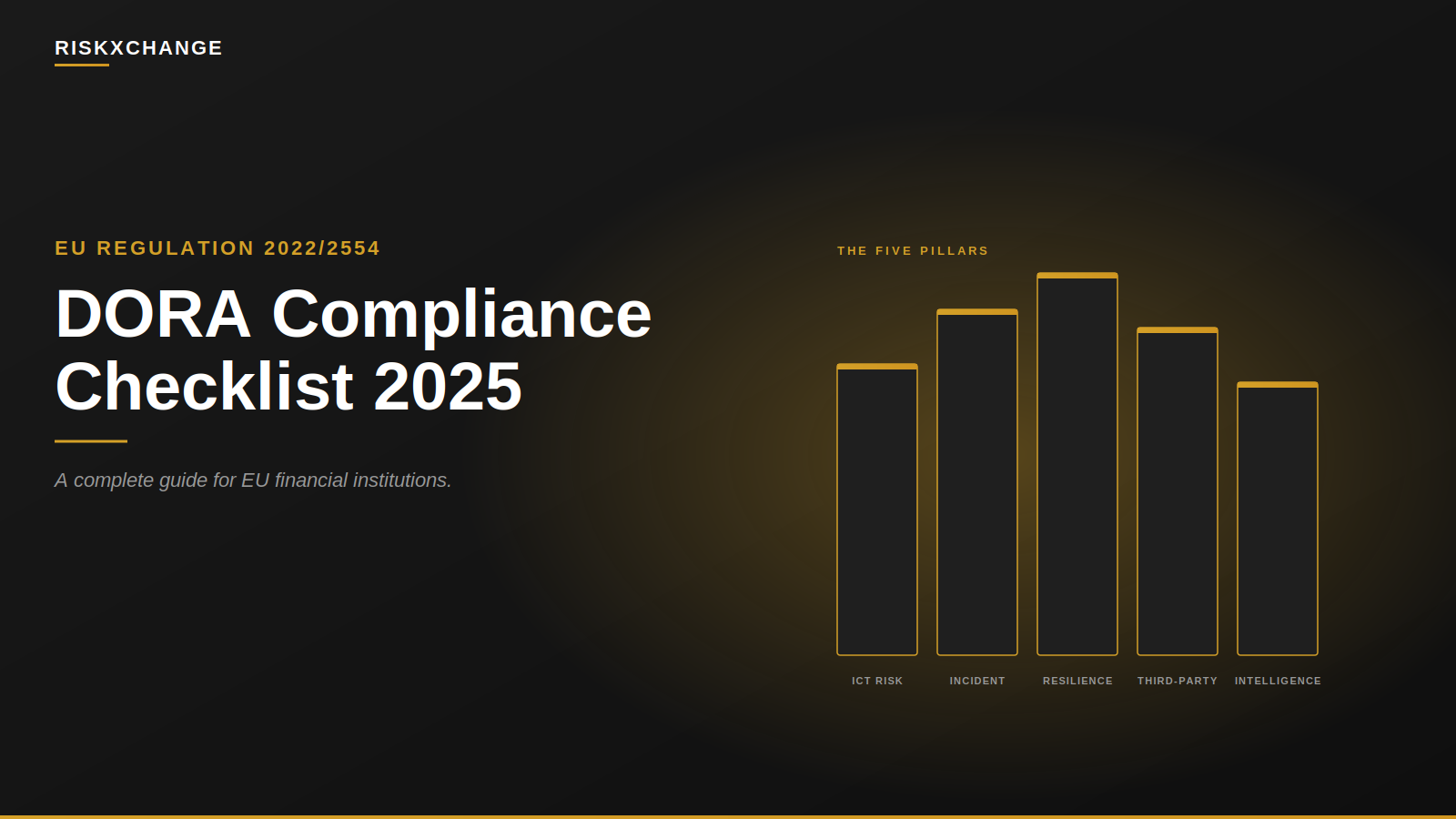 Compliance
DORA Compliance Checklist 2025: Complete Guide for EU Financial Institutions
Complete DORA compliance checklist for EU financial institutions. Essential guide covering ICT risk management, incident reporting, third-party oversight, and operational resilience testing. Ensure your organization meets the January 2025 deadline with actionable compliance strategies.
Read more Compliance
The Essentials of Modern Cybersecurity Law: A 2026 Regulatory Guide
Cybersecurity law in 2026 has shifted from voluntary frameworks to enforceable mandates that demand continuous, real-time oversight. This guide breaks down global regulations like NIS2, DORA, and CIRCIA, and shows how to move from static compliance to a legally defensible, data-driven security posture across your entire supply chain.
Read more Risk Management
Cyber Risk Appetite Statement Examples: A Guide for CISOs in 2026
A cyber risk appetite statement is no longer a static compliance document—it’s a strategic control mechanism for defining how much digital risk an organisation is willing to accept in pursuit of its goals. In 2026, with tightening regulations like SEC four-day disclosure rules and frameworks such as NIS2 and DORA, CISOs and boards must translate risk into clear, quantifiable boundaries that align security decisions with business outcomes. This guide explores how to build and operationalise a modern cyber risk appetite statement, complete with real-world examples across financial services, technology, and critical infrastructure, and shows how continuous risk intelligence and AI-native monitoring help keep those boundaries enforceable in real time.
Read more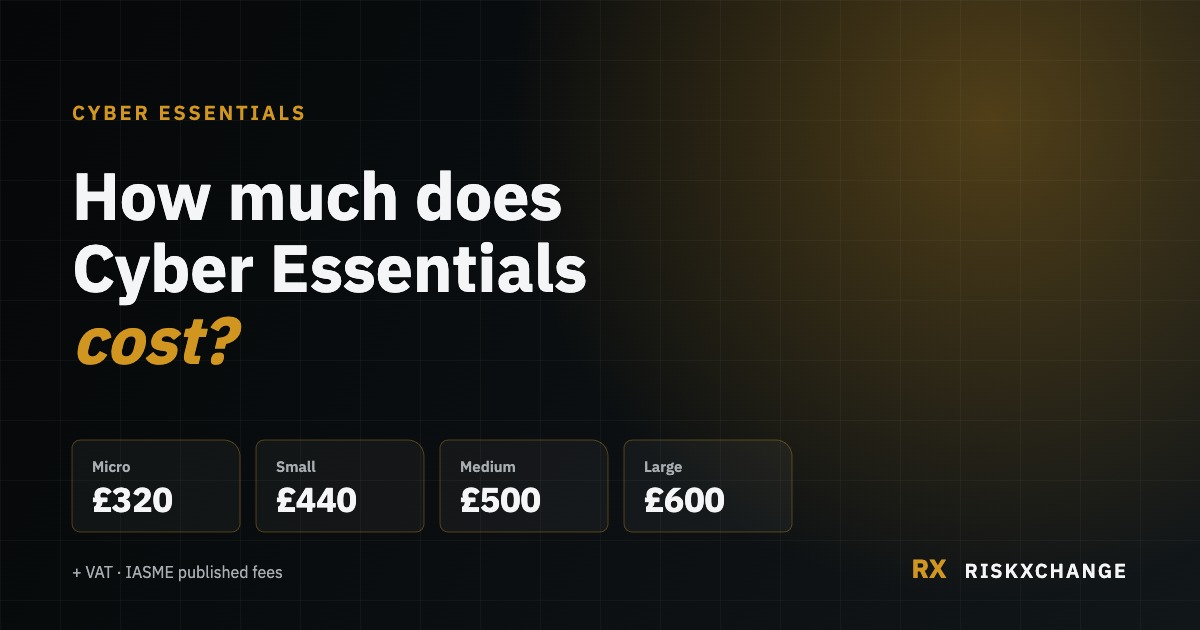 Compliance
How much does Cyber Essentials cost?
The published IASME assessment fees for every organisation size, what Cyber Essentials Plus actually costs, what renewal costs, and the costs that never appear on the price list.
Read more Risk Management
Third-Party Attack Surface Discovery: Securing the Extended Enterprise
Third-party attack surface discovery gives enterprises real-time visibility into the hidden vulnerabilities across their vendor ecosystem. By moving beyond static questionnaires and leveraging AI-native continuous monitoring, organizations can identify shadow IT, map fourth-party dependencies, and establish quantifiable security ratings for every partner. This guide explains how discovery-led TPRM helps security teams reduce supply chain risk, improve remediation workflows, and meet evolving compliance demands such as DORA and NIS2 with confidence.
Read more Risk Management
ESG Risk Management: A Strategic Framework for Supply Chain Resilience in 2026
ESG risk management in 2026 requires a shift from static reporting to continuous, AI-driven monitoring that provides real-time visibility across the entire supply chain. By integrating environmental, social, and governance metrics with cybersecurity ratings, organisations can eliminate blind spots, automate compliance, and transform ESG from a reporting obligation into a measurable driver of resilience and strategic advantage.
Read more Risk Management
Automated Vendor Risk Management: The 2026 Strategic Guide
Manual vendor oversight can no longer keep up with today’s fast-moving supply chain risks, especially as organisations manage hundreds of third parties with limited resources. This guide explains how automated vendor risk management replaces static questionnaires with continuous, AI-driven intelligence, giving security teams real-time visibility into vendor posture, faster remediation cycles, and measurable risk reduction. It explores how automation, security ratings, and integrated monitoring help organisations move from reactive assessment to proactive control across the entire vendor ecosystem.
Read more Risk Management
Board Reporting on Cybersecurity Risk: A Strategic Framework for 2026
Board reporting on cybersecurity risk has evolved from technical updates into a strategic governance requirement in 2026. This guide explores how CISOs and security leaders can translate complex threat data into business resilience metrics that align with board priorities, SEC disclosure mandates, and enterprise risk management goals. Learn how to leverage Cybersecurity Ratings, continuous third-party monitoring, and AI-driven reporting to provide directors with real-time visibility, quantify material risk, and strengthen organisational resilience across the entire supply chain.
Read more Risk Management
Vendor Risk Remediation Best Practices for 2026: A Strategic Guide
Discover the vendor risk remediation best practices every organisation needs in 2026. Learn how to prioritise critical risks, automate remediation workflows, strengthen vendor accountability, and reduce third-party cyber risk through continuous, AI-driven monitoring.
Read more Risk Management
How to protect personally identifiable information from a cyber breach
Personally identifiable information (PII) is a prime target for cybercriminals due to its high value on the dark web. To protect PII from cyber breaches, businesses must follow data compliance regulations like GDPR and HIPAA, rigorously vet third-party vendors, adopt encryption protocols, and implement automated vendor monitoring solutions. Proactive cybersecurity strategies not only strengthen data protection but also build stakeholder trust and ensure regulatory compliance.
Read more Compliance
How to get Cyber Essentials certified
The route to Cyber Essentials certification step by step — scope, the automatic-fail items, the clocks that catch people out, and how to verify a supplier’s certificate.
Read more Risk Management
Choosing the Best Integrated Risk Management Solutions in 2026
Integrated risk management solutions are redefining how organisations approach cybersecurity, compliance, and third-party risk in 2026. By replacing siloed data and static assessments with AI-driven, real-time visibility, IRM platforms provide a unified, actionable view of your entire attack surface. This guide outlines how to evaluate, implement, and scale an IRM strategy that transforms risk from fragmented uncertainty into measurable, proactive control across your enterprise and supply chain.
Read more