Risk ManagementThird-Party Risk
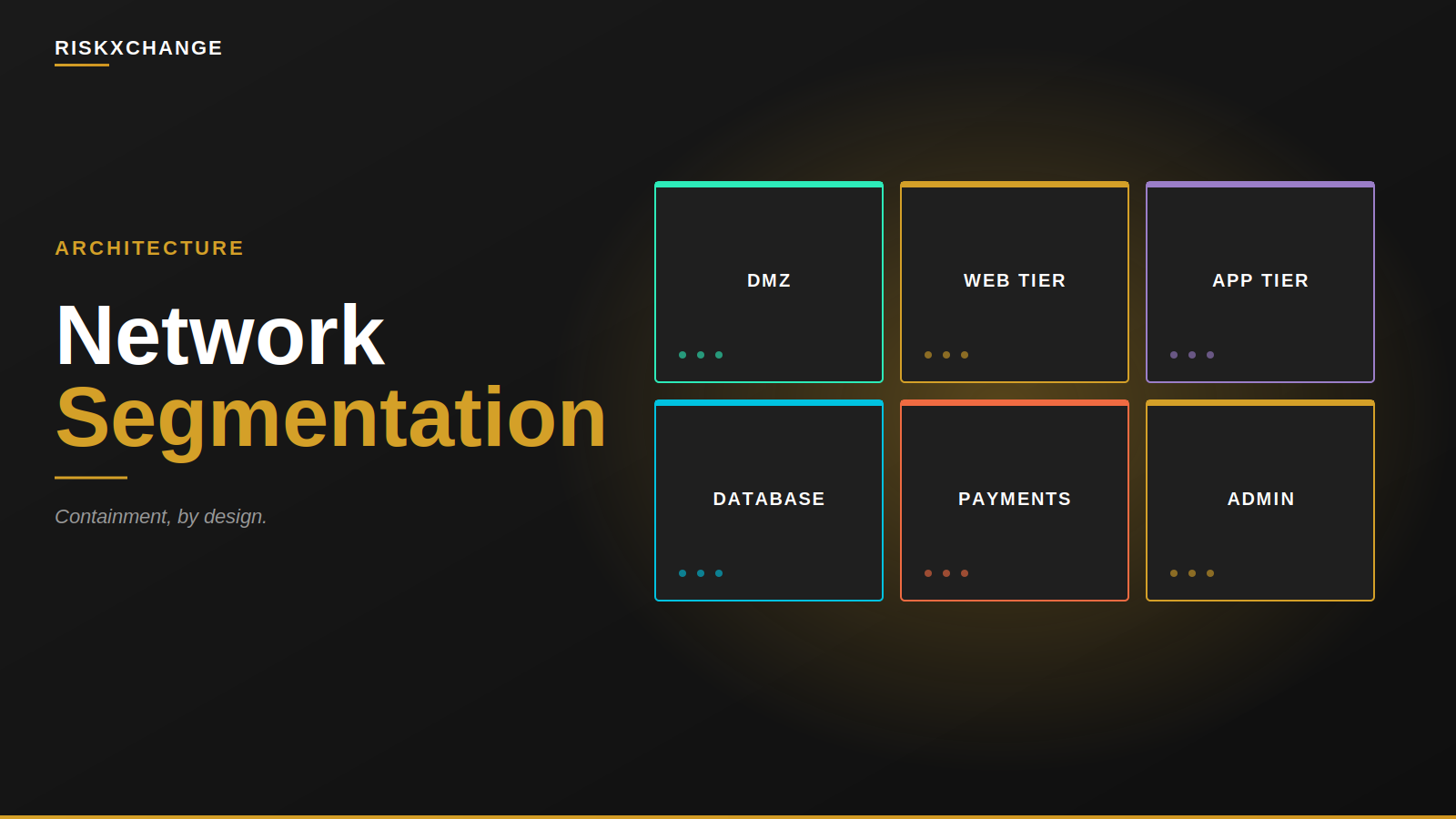
What if the most dangerous threat to your enterprise isn't the attacker trying to breach your perimeter, but the total absence of internal barriers once they've arrived? You likely recognize that a flat network architecture is a critical liability; a 2024 report by IBM indicates that the average cost of a data breach has climbed to $4.88 million, driven largely by the ease of lateral movement. By segmenting the network, you can transform a vulnerable environment into a resilient ecosystem that proactively contains threats and secures your third-party supply chain.
We agree that managing security across hybrid-cloud environments feels increasingly complex, especially when you're responsible for coordinating dozens of third-party access points. This article provides a clear, actionable roadmap for implementing microsegmentation and reducing your attack surface visibility from an outside-in perspective. You'll learn how to move beyond digital blind spots to gain a comprehensive view of your posture, ultimately improving your quantifiable cybersecurity rating and ensuring long-term resilience against evolving 2026 threats.
Key Takeaways
- Shift from a vulnerable flat structure to a resilient ecosystem by understanding why traditional perimeters fail in the 2026 threat landscape.
- Master the balance between security depth and administrative overhead when segmenting the network into strategic macro-zones or granular micro-segments.
- Mitigate third-party risks by implementing "Vendor DMZs" that restrict external visibility to only the most essential business assets.
- Adopt a phased five-step roadmap that prioritizes traffic discovery to ensure your security transition occurs without operational disruption.
- Leverage AI-native visibility and continuous monitoring to transform network segmentation into a dynamic, measurable security metric.
Table of Contents
- What is Network Segmentation and Why is it Critical for 2026?
- Macro-segmentation vs. Micro-segmentation: Choosing the Right Granularity
- Protecting the Supply Chain: Segmenting Third-Party and Vendor Access
- A 5-Step Roadmap for Segmenting the Network Without Operational Disruption
- Beyond Static Rules: Continuous Visibility and Attack Surface Monitoring
What is Network Segmentation and Why is it Critical for 2026?
Network segmentation is the strategic architectural practice of dividing a corporate network into smaller, isolated zones. Each zone operates as its own distinct environment with specific security protocols and traffic controls. In 2026, this isn't just a best practice; it's a foundational requirement for operational survival. The traditional concept of a "hard outer shell" has dissolved. As 85% of global enterprises now operate in complex multi-cloud environments, the perimeter has effectively died. Legacy firewalls can't protect what they can't see, and they certainly can't stop a threat that has already bypassed the front door through a compromised third-party API or a remote endpoint.
The primary danger facing modern infrastructure is the "flat network." When a network lacks internal boundaries, a single compromised laptop becomes a gateway to the entire enterprise. This lack of containment was a major factor in high-profile 2025 ransomware attacks, where lateral movement allowed hackers to encrypt core servers within minutes of a localized breach. By segmenting the network, you create a series of internal checkpoints. This approach focuses on blast radius reduction. If a breach occurs in a guest Wi-Fi segment, the damage is contained there, preventing the infection from reaching your financial records or proprietary source code. It transforms the network from a single, vulnerable room into a series of secure vaults.
The Core Benefits: Security, Performance, and Compliance
Effective segmentation transforms a reactive security posture into one of proactive control. It provides three measurable advantages for the modern enterprise:
- Security: It halts lateral movement by requiring strict authentication between zones, protecting sensitive data silos (such as PCI or HIPAA environments) from unauthorized internal access.
- Performance: Dividing the network reduces broadcast traffic and localized congestion. This ensures high-demand environments, such as real-time data processing, maintain 99.9% uptime.
- Compliance: Segmentation simplifies audits. By isolating regulated data, organizations can reduce the scope of their compliance environment by up to 65%, making regulatory cycles faster and less expensive.
From Perimeter Defence to Zero Trust Architecture
The transition from legacy defence to modern resilience requires a shift from "Trust but Verify" to an "Assume Breach" mindset. This is the heart of Zero Trust. Zero Trust is a framework where identity, not location, determines access. In this model, being "inside" the physical network doesn't grant automatic privileges. Every user, device, and application must be verified continuously. By segmenting the network into granular zones, you apply the "Never Trust, Always Verify" philosophy to every packet of data. This outside-in perspective ensures that even if an attacker gains entry, they remain trapped in a single, low-value zone without the ability to move toward your most critical assets.
Macro-segmentation vs. Micro-segmentation: Choosing the Right Granularity
Achieving a Zero Trust architecture requires a calculated approach to segmenting the network. It isn't a binary choice; it's a spectrum of control. Organizations must decide where to draw lines to stop lateral movement without strangling productivity. By 2026, the distinction between broad zones and granular workloads will define the difference between a resilient infrastructure and one prone to cascading failure.
Macro-segmentation: The First Line of Internal Defence
Macro-segmentation uses traditional methods like VLANs and subnets to create broad security zones. Think of it as the perimeter walls between departments. You separate HR from Finance, or the guest Wi-Fi from the production environment. This approach remains vital for isolating legacy IoT devices that lack native security features. A 2023 IBM report noted that 83% of data breaches involve cloud-based assets where traditional subnets often fall short. For organizations looking to implement effective approaches to network segmentation, macro-zones provide a necessary foundation but leave significant gaps inside the perimeter. In a hybrid world, macro-segmentation alone cannot protect against sophisticated attackers who've already bypassed the front door.
Micro-segmentation: Securing Individual Workloads
Micro-segmentation takes security to the workload level. It applies specific policies to individual applications or virtual machines. This is where Software-Defined Networking (SDN) becomes essential. SDN allows admins to automate policy enforcement across thousands of endpoints through a centralized plane. You're no longer just watching North-South traffic. You're monitoring the "east-west" traffic that accounts for roughly 70% of all data centre communication. In containerized environments like Kubernetes or Docker, micro-segmentation ensures that a compromise in one pod doesn't lead to a total cluster takeover. It provides the visibility needed to treat every workload as its own protected micro-perimeter.
The deeper you go, the more complex the environment becomes. Over-segmentation is a real risk that leads to "policy bloat." This happens when IT teams manage thousands of contradictory rules, causing operational paralysis. Industry projections suggest that by 2026, 60% of enterprises will struggle with segment sprawl if they don't utilize automated visibility tools. You need to see the threat from an outside-in perspective to prioritize which segments require the highest level of granularity. Segmenting the network should empower your team, not overwhelm them. Success lies in finding the balance where security depth meets administrative reality, ensuring that your most critical assets are shielded without creating a management nightmare.

Protecting the Supply Chain: Segmenting Third-Party and Vendor Access
Third-party access is the primary entry point for 62% of modern enterprise breaches. Your supply chain isn't just a logistical network; it's a digital one. When you provide a vendor with credentials, you're often handing them a map of your internal infrastructure. To mitigate this, enterprise leaders are moving toward "Vendor DMZs." These specialized segments limit third-party visibility to only the specific assets required for their contract. By segmenting the network in this way, you ensure that a compromise at a partner firm doesn't translate into a total takeover of your own environment.
The Outside-In Perspective: How Attackers View Your Segments
Attackers perform reconnaissance from the outside-in, looking for the path of least resistance. A flat network structure makes this easy. Effective network structure directly impacts your company’s overall Cybersecurity Rating. This quantifiable metric tells the world, and potential attackers, how well you've hidden your critical assets. Integrating Third-Party Risk Management (TPRM) with your technical controls allows you to see what the attacker sees. Micro-segmentation acts as the ultimate containment strategy, turning your internal architecture into a series of locked rooms rather than an open floor plan. This visibility drives a proactive containment strategy that keeps your most sensitive data invisible to external scans.
Implementing Identity-Based Segmentation for Partners
IP-based rules are no longer sufficient for managing modern contractors. You must move toward identity-centric access. This means Multi-Factor Authentication (MFA) serves as the non-negotiable gatekeeper for every single network segment. By integrating Network Access Control (NAC) with your TPRM platform, you can automate access based on risk levels. If a vendor's security score drops below a certain threshold, the NAC can instantly restrict their segment access. Segmenting the network also requires time-bound controls. Implementing Just-In-Time (JIT) provisioning ensures that a vendor only has access for the duration of a specific task. Continuous monitoring within these segments detects anomalous behavior, such as a maintenance account suddenly querying a database, and triggers an immediate lockout. This precision turns third-party access from a liability into a managed, transparent process.
A 5-Step Roadmap for Segmenting the Network Without Operational Disruption
Executing a strategy for segmenting the network isn't a single event. It's a disciplined evolution. Most organizations fail because they attempt to enforce strict isolation before they understand their own traffic. This leads to broken workflows and emergency rollbacks. A "Crawl, Walk, Run" approach ensures that security enhances resilience instead of hindering productivity. By moving from visibility to simulation and finally to enforcement, you maintain total control over your digital environment.
Step 1: Visibility and Traffic Mapping
You can't protect what you can't see. Start by using flow logs and automated discovery tools to map every connection across your infrastructure. This outside-in perspective reveals how data actually moves, not just how you think it moves. During this phase, identify your Crown Jewels. These are the critical assets that represent your highest risk. Research from 2024 indicates that 68% of lateral movement attacks target these high-value databases. Flag legacy systems immediately. These older assets often use sensitive, non-standard protocols that require custom handling during the segmentation process.
Step 2 & 3: Policy Design and Simulation
Once visibility is established, group your assets into logical Protect Surfaces based on specific business functions. This moves the focus from hardware to outcomes. Before you block a single packet, run your new policies in Audit Mode. This log-only state is your safety net. It allows you to see exactly which connections would've been blocked without actually disrupting the business. A 2025 industry benchmark found that 92% of initial segmentation rules require refinement due to hidden application dependencies. Use this data to prune false positives over a 30 to 60 day window before moving to active enforcement.
Step 4 & 5: Enforcement and Continuous Validation
Begin enforcement in phases, starting with the least critical zones to validate your logic in a live environment. As you scale to thousands of micro-segmentation rules, manual management becomes a liability. Use automation to manage the rule lifecycle, ensuring that as new cloud instances spin up, they're automatically placed in the correct segment. Modern networks are fluid, so your rules must be too. Schedule a quarterly review to prune policy bloat. This keeps your security posture lean and prevents the accumulation of "shadow rules" that can create new vulnerabilities over time.
Understanding your risk starts with a clear view of your external posture. Get your free Cybersecurity Rating from RiskXchange to see how your network appears to potential attackers today.
Beyond Static Rules: Continuous Visibility and Attack Surface Monitoring
Many executives view segmenting the network as a singular engineering hurdle to clear. This perspective is dangerous. In a digital environment where cloud instances spin up in seconds and remote access points fluctuate, your segmentation strategy must be as fluid as the infrastructure it protects. RiskXchange’s AI-native platform functions as the essential validation engine for this strategy. It ensures that the digital walls you've built remain unbreached by shadow IT, forgotten legacy systems, or misconfigured APIs.
Continuous attack surface management reveals the "leaky" segments that internal audits often miss. Industry data from 2025 indicates that 62% of organizations discovered unauthorized bridges between sensitive data tiers and public-facing assets only after implementing continuous monitoring. Real-time visibility allows you to identify these vulnerabilities before an attacker exploits them. This approach transforms segmenting the network from a defensive posture into a tool for operational resilience. If a breach occurs in a peripheral segment, your core operations remain insulated and functional. You don't just survive an attack; you maintain business continuity through it.
Closing the Loop with Cybersecurity Ratings
Effectiveness in security is often difficult to quantify for non-technical stakeholders. RiskXchange solves this by providing a real-time Cybersecurity Rating that reflects the current integrity of your network boundaries. When you tighten your isolation protocols, your score rises. This provides a clear, data-driven way to prove the ROI of segmentation projects to the Board. You can access Attack Surface Management tools to gain an outside-in perspective, ensuring your internal controls effectively mitigate the risks visible to the rest of the world.
The Future: AI-Driven Autonomous Segmentation
The next evolution involves a shift from manual rule-writing to intent-based networking. By late 2026, AI will likely identify and isolate threats in milliseconds by re-configuring segments automatically. This eliminates the latency of human intervention during a lateral movement event. You're no longer just managing a perimeter; you're overseeing a self-healing ecosystem. Segmentation is the lens through which you take control of your digital footprint. It ensures that your organization remains a hard target in an era of automated, high-velocity threats.
Mastering Resilience Through Proactive Containment
The transition toward 2026 requires a shift from passive defense to active containment. Gartner predicts that by 2026, 60% of enterprises will implement zero trust architectures as a starting point for security, making the process of segmenting the network a fundamental business requirement. You've seen how balancing macro and micro-segmentation prevents lateral movement. You also understand that securing the supply chain is vital, especially since 62% of system intrusion incidents now originate through a third-party partner according to Verizon's 2023 Data Breach Investigations Report. Moving beyond static rules ensures your visibility keeps pace with an evolving attack surface.
RiskXchange provides the clarity you need to navigate these complexities. Our AI-native TPRM solution offers real-time risk management and continuous monitoring of global supply chains, a strategy already trusted by Fortune 500 enterprises for comprehensive attack surface visibility. You can replace blind spots with a quantifiable Cybersecurity Rating that defines your true posture. Take control of your attack surface with RiskXchange’s 360-degree monitoring platform. You're ready to build a more resilient, transparent future for your organization's digital ecosystem.
Frequently Asked Questions
What is the difference between subnetting and network segmentation?
Subnetting primarily optimizes network performance by dividing a large network into smaller, manageable pieces to reduce broadcast traffic. While it organizes IP addresses, it doesn't inherently provide security boundaries. Segmenting the network focuses on risk containment by applying strict security policies between these sub-networks. By 2026, Gartner predicts 60% of enterprises will move beyond simple subnetting to granular segmentation to protect critical assets from lateral movement.
Can network segmentation prevent ransomware from spreading?
Network segmentation is a primary defense against ransomware because it restricts lateral movement across your infrastructure. If an attacker breaches one segment, the containment protocols prevent the infection from reaching your entire database or core servers. According to IBM's 2023 Cost of a Data Breach Report, organizations with high levels of segmentation saved an average of $1.76 million compared to those with flat networks. It turns a potential total system failure into a manageable, isolated incident.
Is microsegmentation only for cloud environments?
Microsegmentation applies to on-premises data centers and hybrid environments just as effectively as it does to the cloud. It allows security teams to create granular perimeters around individual workloads or specific applications regardless of their physical location. Research from Forrester indicates that 45% of security leaders now prioritize microsegmentation for legacy systems to extend the life of aging hardware. This approach ensures visibility into east-west traffic that traditional perimeter defenses often miss.
How does segmenting the network affect user experience and latency?
Properly configured segmentation has a negligible impact on latency, often adding less than 1 millisecond of delay to standard traffic flows. Modern software-defined networking tools manage these policies at the hardware level to ensure a seamless experience for the end user. If you implement segmenting the network with automated orchestration, you actually reduce congestion by isolating heavy traffic loads. This proactive control maintains high performance while significantly hardening your overall security posture.
What are the biggest challenges in implementing network segmentation?
The most significant challenge is the lack of initial visibility into existing traffic patterns and application dependencies. A 2024 industry survey found that 52% of IT teams struggle with manual policy creation because they don't fully understand how their applications communicate. Overcoming this requires a phased approach that starts with comprehensive discovery. Without a clear outside-in view of your digital footprint, you risk breaking critical business processes during the implementation phase.
Does network segmentation replace the need for a firewall?
Segmentation doesn't replace firewalls; it extends their functionality deeper into the internal network. While traditional firewalls guard the perimeter, internal segmentation uses Next-Generation Firewalls or software-defined agents to monitor traffic between segments. The Cybersecurity and Infrastructure Security Agency recommends this layered approach in their Zero Trust Maturity Model. It ensures that even if your perimeter is breached, you still have internal checkpoints to detect and stop unauthorized access.
How often should network segmentation policies be reviewed?
You should review your segmentation policies at least every 90 days to account for new devices and evolving threats. However, high-risk industries often adopt continuous monitoring to identify policy violations in real time. Maintaining a strong Cybersecurity Rating requires this level of constant vigilance. If your business undergoes a major infrastructure change, like a cloud migration or a merger, you must audit your segments immediately to prevent new blind spots from forming.
Done reading? See it on your vendors.
Book a 30-minute call and we'll have NOVA, ARIA and REX produce a complete posture report on a vendor of your choice inside 24 hours.