DORA Compliance Checklist: Complete Guide for Financial Institutions 2025
The Digital Operational Resilience Act (DORA) represents one of the most significant regulatory
changes for the financial sector in recent years. With the compliance deadline of January 17, 2025,
now in effect, financial institutions across the European Union must demonstrate full compliance with
DORA's comprehensive ICT risk management requirements.
This complete DORA compliance checklist provides financial organizations with a systematic approach
to meeting all regulatory requirements while strengthening their operational resilience against cyber
threats and ICT disruptions.
Understanding DORA: The Foundation of Financial ICT Resilience
The Digital Operational Resilience Act (EU Regulation 2022/2554) establishes uniform standards for
managing ICT risks across the EU financial sector. DORA applies to over 22,000 financial entities,
including banks, insurance companies, investment firms, payment institutions, and their critical ICT
service providers.
Key DORA Statistics:
Compliance deadline: January 17, 2025 (now in effect)
Penalties: Up to 1% of average daily worldwide turnover
Scope: All financial entities operating in EU member states
Critical areas: Five pillars of operational resilience
The Five Pillars of DORA Compliance
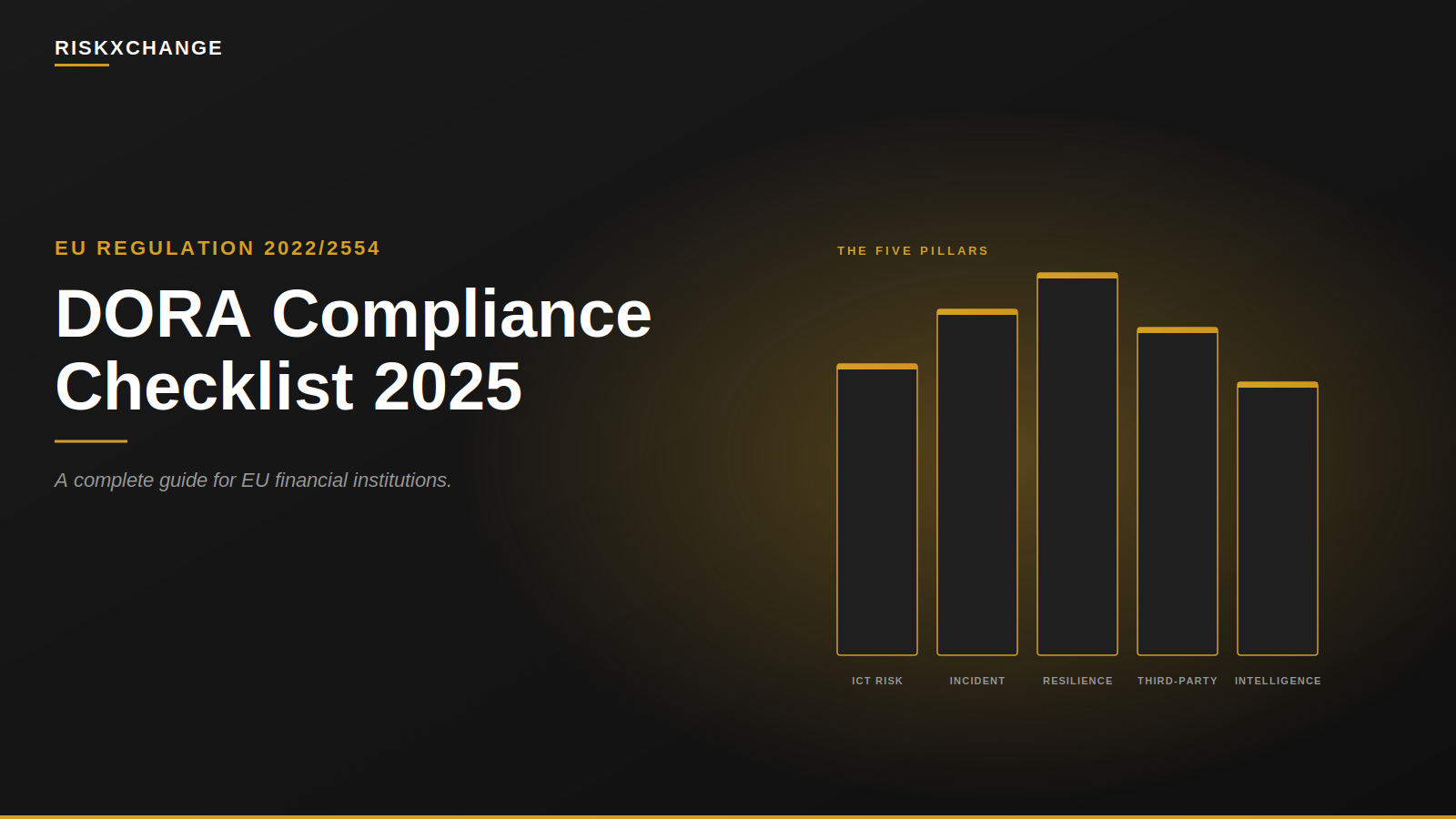
DORA compliance is built on five fundamental pillars that work together to create comprehensive operational resilience:
1. ICT Risk Management Framework
2. ICT Incident Classification and Reporting
3. Digital Operational Resilience Testing
4. ICT Third-Party Risk Management
5. Information and Intelligence Sharing
Complete DORA Compliance Checklist
Pillar 1: ICT Risk Management Framework
Strategic Governance Requirements
☐ Board-Level ICT Risk Oversight
- Designate board members responsible for ICT risk management
- Establish clear ICT risk appetite statements
- Define digital operational resilience strategy at senior management level
- Implement regular board reporting on ICT risk metrics
☐ ICT Risk Management Policy Development
- Create comprehensive ICT risk management policies
- Define roles and responsibilities across all organizational levels
- Establish risk tolerance thresholds and impact tolerances
- Integrate ICT risk management into overall risk management framework
Operational ICT Risk Management
☐ ICT Asset Inventory and Mapping
- Maintain complete inventory of all ICT assets and systems
- Document critical ICT dependencies and interconnections
- Identify and classify business-critical ICT functions
- Map data flows across all ICT systems
☐ Risk Assessment and Monitoring
- Conduct regular ICT risk assessments using established methodologies
- Implement continuous monitoring of ICT systems and networks
- Establish Key Risk Indicators (KRIs) for ICT operational resilience
- Document all identified ICT risks in a comprehensive risk register
☐ Business Continuity and Disaster Recovery
- Develop robust business continuity plans for ICT disruptions
- Establish Recovery Time Objectives (RTOs) and Recovery Point Objectives (RPOs)
- Test backup systems and data recovery procedures regularly
- Maintain alternative processing sites and communication channels
Pillar 2: ICT Incident Classification and Reporting
Incident Detection and Classification
☐ Incident Detection Capabilities
- Implement 24/7 monitoring systems for ICT incidents
- Establish automated alert mechanisms for critical system failures
- Deploy Security Information and Event Management (SIEM) systems
- Train staff to recognize and report potential ICT incidents
☐ Incident Classification Framework
- Define criteria for classifying ICT incidents by severity
- Establish major incident criteria based on DORA requirements
- Create incident escalation procedures and communication protocols
- Document all incidents in a centralized incident management system
Regulatory Reporting Requirements
☐ Major Incident Reporting Timeline
- Initial notification: Within 24 hours of incident detection
- Intermediate report: Within 72 hours with analysis and mitigation steps
- Final report: Within 1 month with complete remediation details
- Ensure all reports meet EBA, EIOPA, and ESMA technical standards
☐ Reporting Infrastructure
- Establish secure channels for regulatory incident reporting
- Implement XBRL-compliant reporting systems where required
- Train incident response teams on reporting procedures
- Maintain backup reporting mechanisms in case of system failures
Pillar 3: Digital Operational Resilience Testing
Testing Strategy and Planning
☐ Comprehensive Testing Framework
- Develop annual resilience testing plans covering all critical systems
- Include threat-led penetration testing (TLPT) for significant institutions
- Plan tabletop exercises and crisis simulation scenarios
- Coordinate testing schedules to minimize business disruption
☐ Testing Scope and Coverage
- Test critical ICT functions under various failure scenarios
- Include testing of backup systems and recovery procedures
- Verify effectiveness of business continuity plans
- Test communication systems and alternative processing capabilities
Testing Execution and Reporting
☐ Testing Implementation
- Conduct regular vulnerability assessments and penetration tests
- Perform business impact analysis for all critical systems
- Execute real-world scenario simulations
- Document all testing activities and results
☐ Remediation and Improvement
- Address all identified vulnerabilities within defined timeframes
- Update systems and procedures based on testing results
- Implement lessons learned from testing exercises
- Track remediation progress with clear accountability measures
Pillar 4: ICT Third-Party Risk Management
Vendor Assessment and Due Diligence
☐ Third-Party ICT Provider Inventory
- Maintain comprehensive register of all ICT service providers
- Classify providers based on criticality to business operations
- Document all contractual arrangements and service dependencies
- Submit Register of Information (RoI) to National Competent Authorities by April 30, 2025
☐ Vendor Risk Assessment ProcessConduct thorough due diligence on all new ICT providers
- Assess financial stability, technical capabilities, and security measures
- Evaluate concentration risks from over-reliance on single providers
- Perform regular reviews of existing provider risk profiles
- Contract Management and Oversight
☐ DORA-Compliant Contract Terms
- Include mandatory audit rights and inspection provisions
- Define clear Service Level Agreements (SLAs) with penalties
- Require disclosure of all subcontracting arrangements
- Establish data access and portability rights
☐ Ongoing Monitoring and Management
- Implement continuous monitoring of third-party performance
- Conduct regular security assessments of critical providers
- Maintain exit strategies for all critical ICT service providers
- Ensure provider participation in resilience testing exercises
Critical Third-Party Provider (CTPP) Compliance
☐ CTPP Designation Preparation
- Prepare for potential designation as Critical Third-Party Provider
- Understand ESA oversight requirements and processes
- Implement governance frameworks for regulatory oversight
- Prepare documentation for ESA examinations
Pillar 5: Information and Intelligence Sharing
Threat Intelligence Framework
☐ Threat Intelligence Capabilities
- Establish processes for collecting and analyzing cyber threat intelligence
- Participate in industry threat-sharing initiatives
- Subscribe to relevant threat intelligence feeds and services
- Develop internal threat analysis and dissemination capabilities
☐ Information Sharing Participation
- Join relevant industry information sharing arrangements
- Participate in sector-specific threat intelligence groups
- Collaborate with other financial institutions on emerging threats
- Share anonymized threat indicators with industry peers
Regulatory Intelligence and Reporting
☐ Regulatory Engagement
- Maintain regular communication with National Competent Authorities
- Participate in regulatory consultations and industry working groups
- Share lessons learned and best practices with regulators
- Contribute to sector-wide resilience improvement initiatives
Implementation Timeline and Priorities
Immediate Actions (Already Required)
- Complete gap analysis against DORA requirements
- Establish board-level ICT risk governance
- Implement incident reporting procedures
- Begin third-party risk assessment process
Short-term Priorities (Next 3-6 Months)
- Enhance ICT risk management frameworks
- Upgrade incident detection and monitoring capabilities
- Negotiate DORA-compliant contracts with ICT providers
- Prepare Register of Information submissions
Medium-term Goals (6-12Months)
- Complete comprehensive resilience testing programs
- Finalize third-party exit strategies
- Enhance threat intelligence capabilities
- Optimize regulatory reporting processes
Ongoing Requirements
- Continuous monitoring and risk assessment
- Regular testing and validation exercises
- Quarterly reporting to management and regulators
- Annual review and update of all DORA compliance measures
Technology Solutions for DORA Compliance
Essential Technology Stack
Risk Management Platforms
- Integrated ICT risk management systems
- Automated compliance monitoring tools
- Third-party risk assessment platforms
- Business continuity management solutions
Monitoring and Detection
- 24/7 Security Operations Center (SOC) capabilities
- Advanced SIEM and log management systems
- Network monitoring and anomaly detection tools
- Automated incident response platforms
Testing and Validation Tools
- Vulnerability scanning and assessment platforms
- Penetration testing frameworks
- Business continuity testing tools
- Disaster recovery automation systems
Compliance Automation
Organizations can significantly reduce compliance burden through automation:
- Automated data collection and reporting
- Real-time compliance monitoring dashboards
- Integrated risk assessment workflows
- Streamlined regulatory reporting processes
Common DORA Compliance Challenges and Solutions
Challenge 1: Complex Third-Party Ecosystem Management
Solution: Implement centralized vendor management platforms with automated risk scoring and
continuous monitoring capabilities.
Challenge 2: Real-Time Incident Reporting Requirements
Solution: Deploy automated incident detection systems with pre-configured reporting templates that
meet regulatory standards.
Challenge 3: Comprehensive Resilience Testing
Solution: Develop risk-based testing programs that prioritize critical systems while maintaining
operational efficiency.
Challenge 4: Cross-Border Regulatory Coordination
Solution: Establish clear procedures for multi-jurisdictional reporting and maintain relationships with
all relevant regulators.
Measuring DORA Compliance Effectiveness
Key Performance Indicators (KPIs)
Operational Resilience Metrics
- Mean Time to Recovery (MTTR) for critical system failures
- System availability and uptime percentages
- Incident response time measurements
- Business continuity plan activation success rates
Risk Management Effectiveness
- ICT risk assessment coverage and frequency
- Third-party risk rating improvements
- Vulnerability remediation timeframes
- Regulatory finding closure rates
Compliance Process Metrics
- Regulatory reporting timeliness and accuracy
- Testing program completion rates
- Staff training and awareness levels
- Compliance cost optimization measures
The Business Case for DORA Compliance
Beyond Regulatory Requirements
DORA compliance offers significant business benefits beyond meeting regulatory obligations:
Enhanced Operational Resilience
- Improved system reliability and availability
- Faster recovery from ICT incidents
- Better preparedness for cyber threats
- Reduced operational risk exposure
Competitive Advantage
- Stronger customer confidence in digital services
- Enhanced reputation for operational excellence
- Improved vendor and partner relationships
- Better risk-adjusted returns on technology investments
Cost Optimization
- Reduced impact of ICT incidents on business operations
- More efficient resource allocation through risk prioritization
- Lower insurance premiums through demonstrated risk management
- Streamlined compliance processes across multiple regulations
Future-Proofing Your DORA Compliance Program
Emerging Trends and Considerations
Technology Evolution
- Cloud-native resilience architectures
- AI-powered threat detection and response
- Quantum-safe cryptography implementation
- Advanced automation in compliance monitoring
Regulatory Development
- Convergence with other EU regulations (NIS2, GDPR, MiCA)
- Enhanced supervisory expectations and guidance
- Cross-sector collaboration requirements
- International regulatory alignment initiatives
Industry Best Practices
- Continuous improvement methodologies
- Integrated risk management approaches
- Public-private partnership models
- Shared infrastructure resilience solutions
Frequently Asked Questions About DORA Compliance
What is the DORA compliance deadline?
The Digital Operational Resilience Act (DORA) compliance deadline was January 17, 2025, and is now
in effect for all EU financial institutions. Organizations must demonstrate full compliance with all DORA
requirements, including ICT risk management frameworks, incident reporting procedures, and third-
party risk oversight.
What are the penalties for DORA non-compliance?
DORA non-compliance penalties can be severe, including fines of
up to 1% of the organization's average daily worldwide turnover from the preceding business year. Beyond financial penalties, regulators may impose operational restrictions, suspend certain activities, require costly remediation
measures, and increase regulatory scrutiny. Non-compliance also risks significant reputational damage
and erosion of customer trust.
Who needs to comply with DORA?
DORA applies to all financial entities operating within the EU, regardless of where their headquarters
are located. This includes:
- Banks and credit institutions
- Insurance and reinsurance companies
- Investment firms and f
- und managers
- Payment institutions and e-money institutions
- Crypto-asset service providers
- Critical ICT third-party service providers to financial institutions
- Central securities depositories and trade repositories
What are the five pillars of DORA?
The five pillars of DORA are:
1. ICT Risk Management: Comprehensive frameworks for managing technology risks
2. ICT Incident Classification and Reporting: Structured processes for detecting and reporting
incidents
3. Digital Operational Resilience Testing: Regular testing including penetration tests and scenario
simulations4. ICT Third-Party Risk Management: Oversight and management of technology service providers
5. Information and Intelligence Sharing: Collaboration and threat intelligence sharing within the
financial sector
How long does DORA compliance implementation typically take?
DORA compliance implementation timelines vary depending on organizational size and current
maturity levels. Most financial institutions require 6-18 months for full implementation, including:
- Immediate actions (1-3 months): Gap analysis, governance setup, incident reporting
- Short-term priorities (3-6 months): Framework development, system upgrades, contract negotiations
- Medium-term goals (6-12 months): Testing programs, third-party assessments, staff training
- Ongoing requirements: Continuous monitoring, regular testing, and annual reviews
What's the difference between DORA and other EU regulations like GDPR or NIS2?
While GDPR focuses on data protection and NIS2 addresses network and information security across
critical sectors, DORA specifically targets operational resilience in the financial sector. DORA complements these regulations by:
- Focusing specifically on ICT operational resilience rather than general cybersecurity
- Requiring structured incident reporting with specific timelines
- Mandating regular operational resilience testing
- Establishing oversight of critical ICT third-party providers
- Creating information sharing requirements within the financial sector
Do I need to report all ICT incidents under DORA?
No, DORA requires reporting only for "major ICT-related incidents" that meet specific criteria including:
- Significant impact on clients, financial counterparts, or the public
- Duration exceeding the defined threshold for critical functions
- Potential for significant reputational damage
- Cross-border implications or system-wide effects Minor incidents should be logged internally but
don't require regulatory reporting unless they escalate or form patterns indicating systemic issues.
How does DORA affect cloud service providers?
Cloud service providers serving EU financial institutions may be designated as Critical Third-Party
Providers (CTPPs) subject to direct regulatory oversight. This includes:
- Designation process: ESAs assess criticality and notify providers by July 2025
- Oversight requirements: Compliance with regulatory examinations and reporting
- Contractual obligations: Must include DORA-mandated terms in financial sector contracts
- Testing participation: Required involvement in client resilience testing exercises
What documentation do I need for DORA compliance?
Essential DORA compliance documentation includes:
- ICT risk management policies and procedures
- Incident response and business continuity plans
- Third-party risk assessments and contracts
- System inventories and dependency mappings
- Testing plans, results, and remediation records
- Board-level risk appetite statements and strategies
- Staff training records and role assignments
- Register of Information (RoI) submissions to regulators
Can smaller financial institutions get any exemptions from DORA?
While DORA applies to all financial entities, it includes proportionality provisions for smaller institutions:
- Microenterprises may have simplified reporting requirements
- Smaller entities can adopt less complex risk management frameworks
- Proportionate testing: Testing requirements scale with institutional size and risk profile However,
all organizations must meet core requirements for incident reporting, basic ICT risk management,
and third-party oversight regardless of size.
What should I do if my organization is behind on DORA compliance?
If your organization is not yet fully DORA compliant:
1. Conduct an immediate gap analysis to identify critical deficiencies
2. Prioritize high-risk areas such as incident reporting and critical system protections
3. Engage with regulators proactively about your compliance timeline and challenges
4. Implement interim measures to reduce operational risks while building full compliance
5. Consider compliance partnerships with specialized firms like RiskXchange for accelerated implementation
6. Document all efforts to demonstrate good faith compliance efforts to regulators
Conclusion: Your Path to DORA Excellence
DORA compliance represents more than a regulatory checkbox—it's an opportunity to build truly resilient financial operations that can withstand the evolving landscape of cyber threats and operational challenges. By following this comprehensive checklist and implementing robust risk management practices, financial institutions can achieve compliance while creating lasting competitive Advantages.
The key to successful DORA implementation lies in treating it as an ongoing journey rather than a one-
time project. Organizations that embed DORA principles into their operational DNA will be best
positioned to thrive in an increasingly digital and interconnected financial ecosystem.
Ready to strengthen your DORA compliance program? Contact RiskXchange to learn how our
comprehensive third-party risk management platform can streamline your compliance efforts and
enhance your operational resilience posture.
This article provides general guidance on DORA compliance requirements. Organizations should consult with qualified legal and compliance professionals to ensure their specific regulatory obligations are properly addressed.