UncategorisedThird-Party Risk
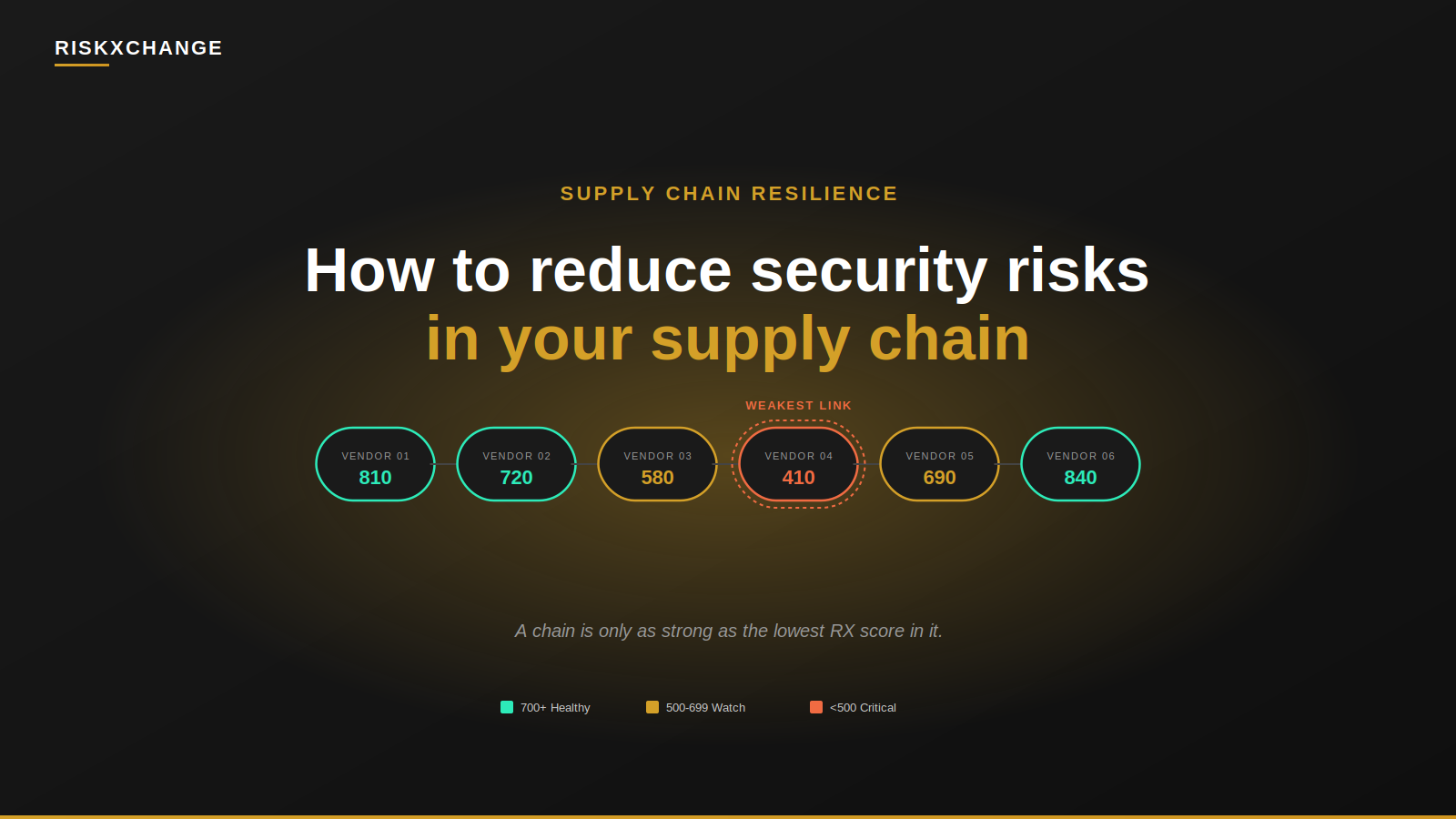
What if the most sophisticated third-party risk management programs are still missing 97% of supply chain vulnerabilities?
Key Takeaways
- Understand the evolution of third-party risk management case studies in 2026 and why static assessments are becoming obsolete.
- Learn how to analyze global supply chain breaches from an "Outside-In" perspective to identify hidden vulnerabilities.
- Discover the benefits of transitioning from annual questionnaires to continuous monitoring for real-time security insights.
- Implement a structured roadmap to scale your TPRM program, focusing on critical vendor identification and establishing baseline Cybersecurity Ratings.
- Explore how AI-driven platforms like RiskXchange can transform vendor risk into resilience, providing actionable insights for your organization.
Table of Contents
- The Anatomy of a High-Impact Third-Party Risk Management Case Study
- Lessons from the Field: Analyzing Global Supply Chain Breaches
- Transitioning from Static Assessments to Continuous Monitoring
- Implementation Roadmap: Scaling Your TPRM Program in 2026
- The RiskXchange Advantage: Transforming Vendor Risk into Resilience
The Anatomy of a High-Impact Third-Party Risk Management Case Study
The modern third-party risk management case study has evolved far beyond static compliance checkboxes. In 2026's AI-driven security landscape, a truly impactful case study demonstrates measurable transformation in how organizations detect, assess, and respond to vendor-related threats. These studies showcase not just what went wrong, but how quantifiable metrics reveal the path from vulnerability to resilience.
Traditional TPRM case studies relied on annual audits and periodic assessments. Today's compelling examples center on continuous monitoring capabilities that deliver real-time risk intelligence.
Lessons from the Field: Analyzing Global Supply Chain Breaches
Examining high-profile breaches through an "Outside-In" lens reveals critical insights into third-party risk management. Notable incidents, such as the 2020 SolarWinds attack, illustrate how a compromised vendor can lead to widespread vulnerabilities across organizations. These breaches underscore that traditional vendor questionnaires often fail to capture the multifaceted risks present in the modern supply chain. As threats evolve, so must our understanding of these vulnerabilities, particularly the hidden dangers posed by "fourth-party" risks—dependencies on subcontractors and suppliers that may not be directly evaluated.
Leveraging an AI-native approach could have identified early warning signs, such as unusual employee behavior or network anomalies, enabling organizations to act before breaches occur. By shifting to a proactive stance in third-party risk management case studies, companies can enhance their resilience against unexpected disruptions.
Case Study: The Ripple Effect of Data Exfiltration
Data exfiltration remains a primary risk vector in 2026, with one compromised vendor employee capable of bypassing robust enterprise defenses. In the case of the Accellion breach, attackers exploited vulnerabilities in a third-party file transfer application, ultimately accessing sensitive data across multiple organizations. This incident highlights the critical need for effective network segmentation and stringent access control as essential components of third-party risk management (TPRM). By isolating systems and limiting access, firms can mitigate the impact of such breaches.
The Attack Surface of the Modern Supply Chain
A thorough mapping of the digital footprint of a typical Fortune 500 vendor reveals significant vulnerabilities, particularly within SaaS and cloud-hosted environments. Common blind spots include misconfigured APIs and unsecured storage solutions that can serve as entry points for attackers. Attack surface management tools provide the necessary "outside-in" lens to identify these weaknesses, empowering organizations to take control of their security posture. By gaining visibility into their supply chain, businesses can better prepare for and respond to potential threats, ultimately enhancing their overall cybersecurity strategy.
As we move toward 2026, understanding these lessons from real-world breaches will be vital for organizations aiming to strengthen their third-party risk management frameworks. By employing comprehensive assessments that include fourth-party risks and utilizing advanced technologies, companies can achieve greater resilience in the face of evolving threats. For more insights and proactive strategies, explore our resources.
Transitioning from Static Assessments to Continuous Monitoring
As organizations strive for greater supply chain resilience, the shift from static assessments to continuous monitoring is pivotal. Traditional annual questionnaires often fail to provide timely insights into vendor security postures. In contrast, real-time security ratings offer a dynamic view that can adapt to changing circumstances, allowing businesses to respond proactively to emerging threats. This transition is not merely a trend; it represents a fundamental evolution in third-party risk management.
The Efficiency Gap: Manual vs. Automated TPRM
Manual vendor risk assessments can be labor-intensive and prone to human error. The average company expends over 120 hours annually per vendor on assessments alone. By adopting automated third-party risk management (TPRM) systems, organizations can save significant man-hours. Automation eliminates human bias from risk scoring, providing a more objective view of vendor vulnerabilities.
- Time Savings: Automated assessments can reduce evaluation time by up to 80%.
- Accuracy: Machine-generated scores eliminate inconsistencies found in subjective evaluations.
For those considering a shift to automation, a comprehensive resource can be found in Choosing a TPRM Software: A Buyer’s Checklist.
Harnessing AI for Real-Time Threat Intelligence
Artificial Intelligence (AI) plays a crucial role in generating actionable insights from vast amounts of data. AI-native platforms like RiskXchange’s Risk Intelligence correlate disparate data points, enabling organizations to assign a real-time risk rating to each vendor. This sophisticated approach ensures that businesses can identify potential risks before they escalate into serious breaches.
Predictive analytics further enhance these capabilities, allowing organizations to forecast vendor defaults or security breaches with greater accuracy. By analyzing historical data and current threat landscapes, businesses can prioritize their risk management efforts effectively. Additionally, adopting the "Mentor" perspective fosters a collaborative approach, guiding vendors toward improved security hygiene and resilience.
In summary, the evolution from static assessments to continuous monitoring is a critical step in enhancing supply chain resilience. By embracing automated processes and leveraging AI for real-time insights, organizations can establish a robust framework for managing third-party risks. This third-party risk management case study illustrates the tangible benefits of these strategies, setting the stage for more secure and resilient supply chains in 2026 and beyond.
Implementation Roadmap: Scaling Your TPRM Program in 2026
As we approach 2026, effective third-party risk management case studies will reveal that a structured implementation roadmap is essential for organizations aiming to enhance their supply chain resilience. This roadmap consists of five critical steps that pave the way for a robust Third-Party Risk Management (TPRM) program.
Step 1: Inventorying the Digital Supply Chain and Identifying Critical Vendors - Begin by mapping your entire digital supply chain. Identify critical vendors whose services or products are integral to your operations. This inventory should categorize vendors based on their risk profile and the potential impact of their failure on your business continuity.
Step 2: Establishing a Baseline Cybersecurity Rating - Evaluate the cybersecurity posture of your entire ecosystem. Utilize tools that provide a quantifiable Cybersecurity Rating for each vendor. This rating should serve as a baseline for ongoing assessments, allowing you to measure improvements and identify weaknesses effectively.
Step 3: Automating the Assessment Lifecycle - Streamline assessments by integrating Governance, Risk, and Compliance (GRC) frameworks into your workflows. Automation can significantly reduce the time spent on manual assessments, enabling your team to focus on high-risk areas. Implement tools that facilitate real-time data integration and analysis.
Step 4: Implementing Continuous "Outside-In" Monitoring - Adopt an "outside-in" monitoring approach for high-risk entities. This requires collecting external intelligence that assesses potential threats and vulnerabilities in real-time. Continuous monitoring not only enhances visibility but also prepares your organization to respond swiftly to emerging risks.
Step 5: Creating a Remediation Feedback Loop - Establish a collaborative remediation process with your third-party partners. This loop allows for ongoing communication about vulnerabilities and threats, enabling vendors to implement corrective actions efficiently.
Aligning with Global Compliance Frameworks
To ensure a comprehensive TPRM workflow, align your program with global compliance frameworks like NIST and ISO, alongside local regulations. Automated reporting can simplify audits for offices in London, Austin, and Dubai, ensuring compliance across jurisdictions. Additionally, integrating Environmental, Social, and Governance (ESG) criteria and data protection measures is crucial for shaping modern risk profiles.
Building the Remediation Workflow
Empower your vendors to self-remediate by providing actionable intelligence. Establish clear thresholds for risk acceptance and termination, ensuring that both parties understand the expectations. It’s essential to frame remediation as a collaborative, not punitive, process, fostering a partnership that prioritizes improvement and resilience.
By following this implementation roadmap, organizations can cultivate a proactive TPRM program, enhancing their ability to manage risks effectively and maintain supply chain resilience as we move into 2026. For more insights on elevating your TPRM strategy, visit our resources.
The RiskXchange Advantage: Transforming Vendor Risk into Resilience
In today's complex supply chain environment, effective third-party risk management is crucial for ensuring business continuity. RiskXchange's AI-native platform exemplifies how to convert vendor risk into resilience, delivering outcomes that mirror the success seen in top-tier third-party risk management case studies. By leveraging advanced data analytics and machine learning, RiskXchange enables organizations to streamline their vendor assessments and enhance their overall cybersecurity posture.
One of the standout features of RiskXchange is its 360-degree Cybersecurity Rating. This rating serves as a single source of truth for cybersecurity health across your supply chain, providing a comprehensive view of vendor risks. With this tool, organizations can make informed decisions based on real-time data, reducing uncertainty and enhancing strategic oversight.
For enterprise clients, the impact has been significant. Companies utilizing RiskXchange have reported a 40% reduction in vendor assessment time. This efficiency not only frees up resources but also allows for quicker decision-making, directly translating to improved operational resilience. Additionally, RiskXchange integrates seamlessly with existing cybersecurity risk management software, aligning with your current processes while enhancing visibility and control.
Actionable Intelligence for the C-Suite
Translating complex technical risks into business-level ROI is essential for C-suite executives. The RiskXchange platform provides actionable intelligence that informs strategic decision-making. By simplifying risk data into easily digestible insights, it empowers leaders to prioritize initiatives that directly impact the bottom line. This approach enables organizations to address vulnerabilities proactively, aligning risk management strategies with overall business goals. To learn more about how this platform can transform your approach to risk management, visit RiskXchange: An AI-Powered Risk Management Platform.
Your Journey to Informed Resilience Starts Here
As we look towards 2026, it is vital to transition from "blind spots" to visibility in your supply chain. RiskXchange takes a consultative approach, with analysts supporting your implementation to ensure a smooth transition. This partnership not only enhances your risk management capabilities but also solidifies your organization’s resilience against potential disruptions. Ready to take control of your supply chain risk? Start your journey with a RiskXchange demo today.
Transform Risk into Resilience: Your Next Strategic Move
The evidence is undeniable:
Frequently Asked Questions
What is the most important metric in a third-party risk management case study?
The most important metric in a third-party risk management case study is the Cybersecurity Rating. This quantifiable score provides insight into the security posture of third-party vendors, allowing organizations to make informed decisions. A high rating often correlates with lower risk exposure, while a low rating may highlight vulnerabilities that need immediate attention.
How does automated TPRM software differ from traditional vendor risk assessments?
Automated TPRM software streamlines the vendor risk assessment process by leveraging real-time data and continuous monitoring. Unlike traditional assessments, which often rely on periodic reviews and manual data collection, automated solutions provide actionable insights instantly. This shift allows organizations to respond proactively to emerging risks, ensuring a more resilient supply chain.
Can a TPRM case study help justify the ROI of a new security platform?
Yes, a TPRM case study can effectively demonstrate the ROI of a new security platform. By showcasing improved risk mitigation, reduced incidents, and enhanced vendor compliance, organizations can illustrate the financial benefits of investing in advanced TPRM solutions. Concrete data, such as reduced breach costs, strengthens the case for new security investments.
What are the common pitfalls identified in supply chain risk case studies?
Common pitfalls in supply chain risk case studies include inadequate risk assessments, lack of continuous monitoring, and poor vendor communication. Many organizations also fail to integrate risk management into their overall business strategy, leading to blind spots. Addressing these issues can significantly enhance supply chain resilience and reduce vulnerabilities.
How long does it typically take to see results from a TPRM implementation?
Typically, organizations can expect to see initial results from TPRM implementation within three to six months. This timeframe allows for the establishment of processes, integration with existing systems, and the collection of baseline data. Long-term benefits, such as improved risk visibility and reduced incidents, may take longer to fully materialize.
Does RiskXchange provide managed services for vendor assessments?
Yes, RiskXchange offers managed services for vendor assessments. These services enable organizations to outsource the complexities of vendor risk management, ensuring thorough evaluations and ongoing monitoring. This approach allows companies to focus on core operations while maintaining a robust risk management framework.
How does continuous monitoring handle fourth-party or subcontractor risk?
Continuous monitoring effectively addresses fourth-party or subcontractor risk by tracking the security posture of primary vendors and their suppliers. This layered approach provides organizations with comprehensive visibility into the entire supply chain, identifying potential vulnerabilities before they can impact operations. Regular assessments and alerts ensure proactive risk management throughout the vendor ecosystem.
Done reading? See it on your vendors.
Book a 30-minute call and we'll have NOVA, ARIA and REX produce a complete posture report on a vendor of your choice inside 24 hours.